Prof HAKIZIMANA Maurice
The Front for the Refoundation of the Nation (FRN), announced in Goma on October 12, 2026, under the leadership of former president Joseph Kabila, is more than a simple merger of the March 23 Movement (M23) and the Congo River Alliance (AFC). It is part of a long history of political and military realignments and regional interventions in the eastern Democratic Republic of the Congo (DRC).
Follow us on WhatsApp: https://whatsapp.com/channel/0029VaCyM5ILdQejDYwQ2b2u
You can also follow us on Facebook: https://www.facebook.com/professormaurice/

To understand its origins, we must go back to the Alliance of Democratic Forces for the Liberation of Congo-Zaire (AFDL), established in October 1996 under the leadership of Laurent-Désiré Kabila. Supported notably by Rwanda and Uganda, this coalition overthrew the regime of Mobutu Sese Seko in May 1997 [1].
Thirty years later, almost to the day, his son, Joseph Kabila, is taking the lead of a new political and military coalition whose main components emerged from the former AFC/M23 alliance. But does the FRN truly represent a break with this past?
(1) The AFDL: The Founding Act
On May 17, 1997, AFDL troops entered Kinshasa, and Laurent-Désiré Kabila became president. Zaire subsequently reverted to the name Democratic Republic of the Congo [1].
However, this victory did not resolve the country’s structural problems. Relations between the new government and some of its former allies gradually deteriorated, particularly over national sovereignty, the presence of foreign troops, and regional security [2].
In 1998, a new war broke out. The Congolese Rally for Democracy (RCD) emerged among the rebel movements supported by regional actors.
The regime change brought about by the AFDL therefore put an end neither to regional rivalries nor to the succession of rebellions.
(2) Successive Rebellions: From the RCD to the M23
Despite peace agreements and the country’s institutional reunification in the early 2000s, security tensions persisted in eastern DRC. Against this backdrop, the National Congress for the Defence of the People (CNDP), led by Laurent Nkunda, emerged, citing security and political concerns, among other issues. Rwanda’s support for the movement is documented in United Nations Security Council report S/2008/773, dated December 12, 2008 [3].
The March 23, 2009 agreement provided, among other things, for the integration of CNDP fighters into the Armed Forces of the Democratic Republic of the Congo (FARDC). Disputes over its implementation contributed to the 2012 mutiny that gave rise to the March 23 Movement (M23).
Militarily defeated in 2013, the M23 resumed hostilities in 2021 and gradually expanded its operations into North Kivu and then South Kivu. Several United Nations reports document renewed Rwandan military support, notably report S/2025/446, dated July 3, 2025 [4].
The movement’s demands and the justifications it has put forward have evolved throughout the conflict, whose causes remain complex. Neither military defeats nor agreements to integrate fighters into the national army have prevented new rebellions from emerging.
(3) The AFC: From Rebellion to Political Coalition
On December 15, 2023, in Nairobi, Corneille Nangaa, former president of the Independent National Electoral Commission (CENI), announced the creation of the Congo River Alliance (AFC), alongside M23 officials.
The AFC seeks to broaden the political framework of the rebellion by bringing together different groups around a project opposed to the government in Kinshasa, while the M23 remains its principal military force.
The AFC/M23 captures of Goma in January 2025 and Bukavu in February strengthened the coalition’s military and political influence, while worsening the humanitarian crisis and complicating peace negotiations. Report S/2025/446 examines, among other things, the coalition’s territorial expansion and economic activities linked to its control of certain areas [4].
Through the AFC, the rebellion acquired a broader political structure, extending its challenge to the central government beyond the military arena.
The FRN emerges from this evolution, presented as a new organization intended to restructure the coalition and give it renewed political leadership [5]. But is changing the organizational framework and leadership enough to transform the nature of the movement?
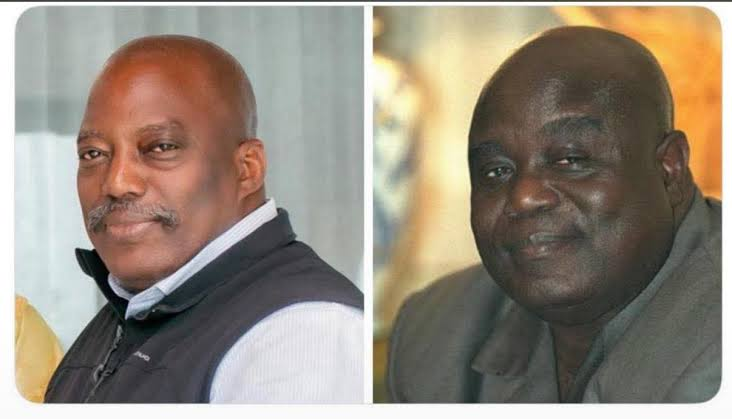
(4) Joseph Kabila’s FRN: Heir to the AFDL?
On October 12, 2026, Joseph Kabila was announced as the leader of the Front for the Refoundation of the Nation (FRN). Corneille Nangaa and Bertrand Bisimwa were presented as vice-presidents, while Sultani Makenga became chief of staff of the Congolese Revolutionary Army (ARC), with the rank of vice-president [5, 8].
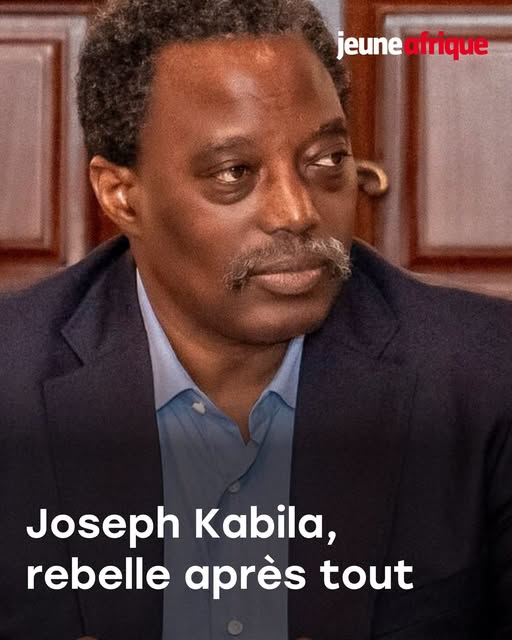
According to the political declaration signed in Goma on October 12, following meetings held on October 10 and 11, and subsequently published on October 13, 2026, the FRN formally succeeds the AFC, whose dissolution it announced. The movement states that it intends to end Félix Tshisekedi’s rule “by all means, including force” [5]. Nevertheless, the precise place of the M23 within the new organizational structure remains to be clarified.
Joseph Kabila’s appointment as head of the FRN gives this realignment a particular historical significance. The son of Laurent-Désiré Kabila, who came to power through the AFDL, he now leads a coalition linked to the former AFC/M23 alliance. The M23, meanwhile, has been associated with serious human rights violations, and Rwanda’s military support for the movement has been documented in several United Nations reports [4]. The former head of state was himself sentenced to death in absentia in 2025 by the Congolese military justice system, notably on charges of treason and war crimes. He describes the proceedings as politically motivated and has also been targeted by US sanctions since that year.
The parallel with the AFDL does not establish any institutional lineage. However, thirty years apart, the same pattern can be observed: an armed coalition backed by regional supporters challenges the central government and seeks to transform itself into a political project.
(5) What Future Awaits the FRN?
From the AFDL to the M23, through the RCD, the CNDP and the AFC, none of these armed coalitions has resolved the root causes of the conflicts in eastern DRC. The FRN’s prospects depend on three major issues.
The first concerns its political credibility. Can Joseph Kabila’s movement claim to contribute to the country’s stabilization when it is part of a rebellion associated with serious allegations of human rights violations? It will also need to break with previous practices and address the responsibilities, including legal responsibilities, arising from the conflict.
Next comes the future of the peace processes. The Washington Peace Agreement, signed on June 27, 2025, between the DRC and Rwanda, and the Doha process, which notably resulted in a framework agreement signed on November 15, 2025, between the Congolese government and the AFC/M23, constitute two distinct but complementary efforts to find a political solution [6, 7].
What will become of these commitments now that the AFC, a signatory to the Doha framework agreement, has given way to the FRN? Further talks are nevertheless expected to take place in Qatar in November.
The economic question remains. The immense mineral wealth beneath eastern Congo’s soil, particularly gold, coltan and cassiterite, fuels competition and serves interests that extend far beyond the borders of the DRC. In paragraphs 112 to 115, report S/2025/446 documents mechanisms for controlling and taxing mining activities in the Rubaya area, smuggling networks, and the plundering of minerals in Goma and Bukavu [4].
The exploitation and commercialization of these minerals also help finance armed groups and prolong instability.
Could the FRN, led by former president Joseph Kabila and now engaged in rebellion, bring peace to a region devastated by thirty years of conflict?
Nothing could be less certain!

Références et sources
References and Sources
[1] Immigration and Refugee Board of Canada, Research Directorate. Zaire / Democratic Republic of the Congo: Chronology of Events, January–July 1997. August 1, 1997.
https://www.refworld.org/reference/countryrep/irbc/1997/97103
[2] United Nations Office of the High Commissioner for Human Rights. Report of the Mapping Exercise Documenting the Most Serious Violations of Human Rights and International Humanitarian Law Committed Within the Territory of the Democratic Republic of the Congo Between March 1993 and June 2003. August 2010.
[3] United Nations Security Council, Group of Experts on the DRC. Final report, document S/2008/773, December 12, 2008.
[4] United Nations Security Council, Group of Experts on the DRC. Letter dated July 3, 2025, addressed to the President of the Security Council, document S/2025/446. See, in particular, paragraphs 112–115.
[5] Front for the Refoundation of the Nation (FRN). Political Declaration, Goma, October 12, 2026. Published by Réveil FM International on October 13, 2026.
[6] Democratic Republic of the Congo and Republic of Rwanda. Peace Agreement, June 27, 2025.
[7] Government of the DRC and AFC/M23. Doha Framework Agreement for a Comprehensive Peace Agreement, November 15, 2025.
Sources: Article initially written in french by Faustin Kabanza for afrik.com
This world,
About the author

Mwalimu Hakizimana Maurice is a teacher, interpreter-translator and writer based in Paris, France.
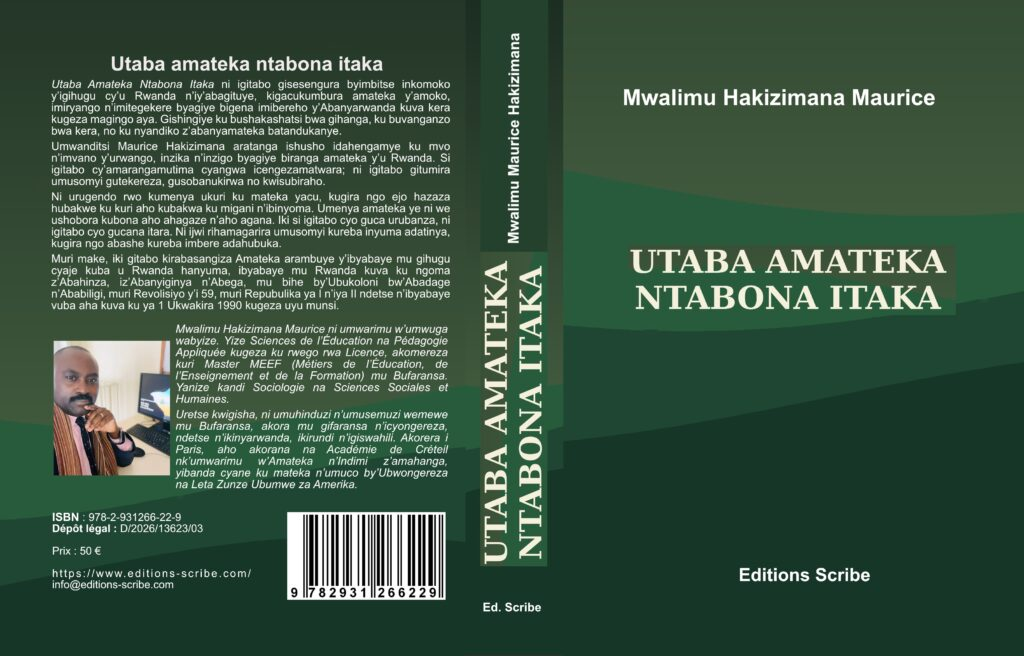
Professor Hakizimana Maurice is the author of the book “UTABA AMATEKA NTABONA ITAKA” (Editions Scribes).
PUB
TIDAS – Translation, Interpreting & Support for Your Asylum and Residency Procedures in France
Welcome to TIDAS (Translation, Interpreting, and Asylum & Residency Assistance in France).Our mission: to help foreigners in France overcome language barriers and administrative obstacles.
Our services:
Translation and interpreting for your appointments and documents
Support with asylum applications
Assistance with all your administrative procedures
With TIDAS, you benefit from a professional, caring, and reliable service.We believe that everyone deserves to be understood and supported.
Contact us today and let’s move forward together at (+33) 07 58 90 35 49 or email us at tidasetvous@gmail.com
TIDAS :
- “TIDAS – Always by Your Side”
- “The Voice of Foreigners in France”
- “Understand, Translate, Support”