Prof HAKIZIMANA Maurice
Kenyan preacher Paul Mackenzie and 28 co-defendants were found guilty on Monday, October 19, of murdering 191 people, including 190 children, in the Shakahola mass graves case. The verdict has once again drawn attention to warnings ignored by the police and local authorities, which the Kenyan Senate had detailed as early as 2023.
Three and a half years after the first bodies were discovered in the Shakahola forest, the Kenyan justice system has delivered a highly anticipated verdict. On Monday, October 19, 2026, following a hearing lasting more than eight hours at the High Court in Mombasa, Judge Diana Kavedza Mochache found Paul Nthenge Mackenzie, founder of the Good News International Church, and 28 co-defendants guilty of murdering 190 children and one adult. She ruled that the defendants had acted together to impose and maintain a fasting regime that led to the victims’ deaths. She rejected the defence argument that the victims had fasted of their own free will.
Follow us on WhatsApp:
https://whatsapp.com/channel/0029VaCyM5ILdQejDYwQ2b2u
Follow us on Facebook:
https://www.facebook.com/professormaurice/
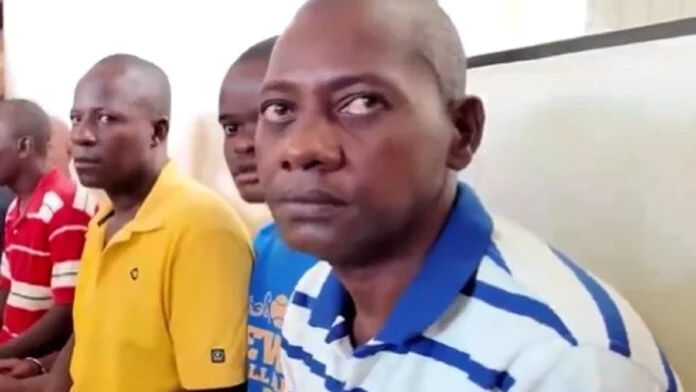
Paul Mackenzie
Sentencing is scheduled for November 6. Probation reports on each of the convicted defendants must first be submitted to the court on October 30, after which the defence will plead for leniency. Kenyan law still provides for the death penalty for murder, but the Supreme Court has ruled that its automatic application is unconstitutional.
(1) Children Sacrificed in the Name of a Promise of Salvation
The case came to light in April 2023. On April 13, police rescued around fifteen emaciated followers in the Shakahola forest, in the inland area of Malindi, Kilifi County. Four of them died while being evacuated. Mackenzie surrendered the following day.
According to the Kenyan Senate report, Orma community herders were among the first to discover graves. Another early discovery was made by a grandfather, Francis Wanje, who had gone looking for his eight-year-old grandson and alerted the Haki Africa non-governmental organisation. Subsequent exhumations uncovered more than 420 bodies, a considerable proportion of them children.
Paul Mackenzie, a former taxi driver in Malindi who became a preacher, founded his religious movement in 2003. His teachings predicted an imminent apocalypse and urged followers to reject institutions he considered ungodly, particularly schools and medical services.
Living in an isolated forest area, some followers had been persuaded that fasting until death would allow them to join Jesus. The judge nevertheless found that coercion had played a role: children were isolated and deprived of food, sometimes in front of their parents, while guards monitored movements and prevented followers from escaping or seeking medical care.
According to the prosecution, the fasting was imposed in stages, beginning with children. Relatives of victims told Reuters that the plan involved three stages: first the children, then the women and young men, and finally the remaining men. Mackenzie reportedly claimed that he would be the last to leave.
Forensic examinations cited by the judge also showed that not all the victims had died of starvation. Some bore signs of strangulation or asphyxiation.
(2) Why Were the Authorities Unable to Arrest Mackenzie Earlier?
Paul Mackenzie was already known to the police well before the mass graves were discovered. He was first arrested in March 2017 for operating an unregistered school through his church in Malindi. He was arrested again in October of the same year during a raid in which dozens of children were found on the premises.
Charged with radicalisation and refusing to send his children to school, he was acquitted in October 2021.
In 2019, the Communications Authority revoked the licence of his Times TV channel, which broadcast his sermons. Mackenzie had also faced prosecution for distributing unclassified films and for encouraging his followers to reject the Huduma Namba, Kenya’s new national identification system, which he described as the “mark of the beast.”
That same year, he announced the closure of his church and led his followers to a plot of land covering approximately 325 hectares in Shakahola. The Senate noted that he had chosen the location because of its isolation, far from public services, and that he encouraged his followers to cut ties with their families.
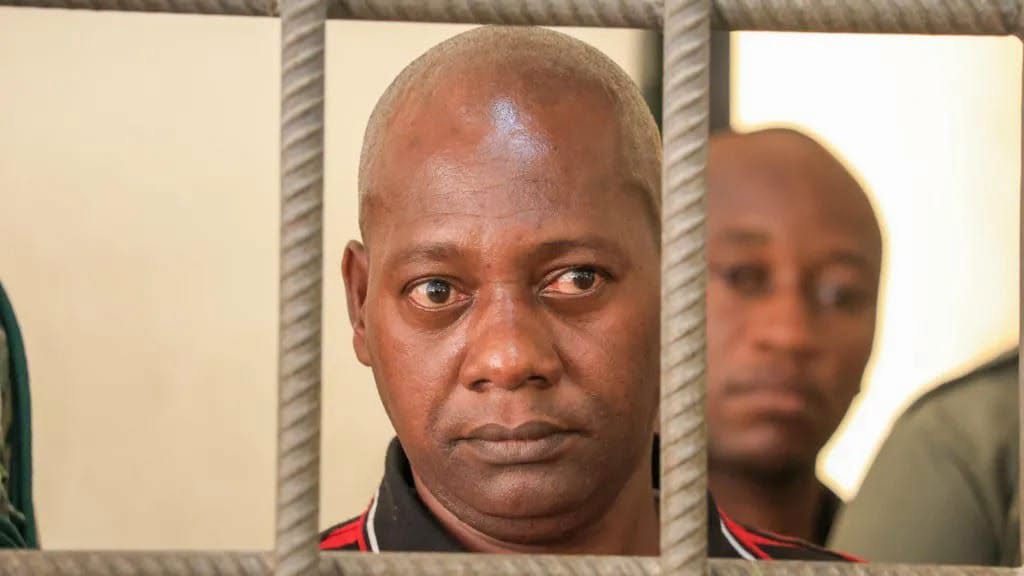
(3) The Missed Opportunities Identified by the Senate
The report of the Senate ad hoc committee, chaired by Senator Danson Mungatana and published in October 2023, details the warning signs that went unheeded.
Since 2017, local police had repeatedly received complaints from religious leaders and residents about the preacher’s activities. The security committee of Kilifi County had summoned him and warned him about his radical teachings, but took no concrete action. The senators concluded that the criminal justice system had failed to stop him.
The most serious episode occurred in March 2023. Following the deaths of two children who had been deprived of food in Shakahola, Mackenzie was arrested on March 22. The Malindi court rejected investigators’ request to keep him in custody and released him on bail of 10,000 Kenyan shillings, equivalent to approximately €70.
According to the report, the preacher subsequently intensified his fasting instructions. Three weeks later, police discovered the first survivors on the verge of death in the forest.
The committee noted that Mackenzie had benefited from very lenient bail conditions in every case brought against him. It called on the judiciary to impose stricter conditions on defendants facing multiple cases.
(4) Numerous Police Officials Were Never Questioned
The report also describes the sect’s internal organisation, including an armed militia tasked with enforcing fasting through violence and an improvised “court” that judged followers who refused to comply.
The committee was never able to question eleven police and investigative officials from Kilifi County who were transferred after the mass graves were discovered.
The then Interior Cabinet Secretary, Kithure Kindiki, argued that some of the officials were witnesses while others were suspects in the investigation. The senators condemned obstruction by the minister and his colleague, Health Cabinet Secretary Susan Nakhumicha, who had asked the chief government pathologist not to appear before the committee.
The senators recommended investigating anyone who had assisted Mackenzie and equipping county security committees with procedures that would enable them to act more quickly on intelligence concerning dangerous religious groups.
The scandal prompted President William Ruto to issue a public apology in May 2023, acknowledging his government’s negligence in handling the case. He established an inquiry commission and a task force to examine the regulation of religious organisations.
Since then, Kenya’s Commission on Administrative Justice, the country’s ombudsman, has denounced serious failures by officials in the territorial administration and the police, who ignored warnings between 2021 and 2023.
After becoming Interior Cabinet Secretary, Kipchumba Murkomen also acknowledged the state’s failure, while clarifying that investigations into misconduct by security services and administrative authorities were still ongoing.
(5) A Conviction That Does Not Bring the Shakahola Case to a Close
The 191 murders covered by the trial represent only part of the human toll of Shakahola. Most of the children’s bodies were too badly decomposed to be identified, and many families are still waiting for answers about the fate of their relatives.
Mackenzie remains under prosecution in other cases linked to the forest, including charges of terrorism and manslaughter, all of which he contests.
The case could prove even larger in scope. In February 2026, prosecutors charged him and seven other people over the deaths of at least 52 followers in Kwa Binzaro, a village in the Chakama area located around 30 kilometres from Shakahola. Bodies had been exhumed there in 2025.
According to the prosecution, Mackenzie orchestrated these deaths while in detention. The defendants, who face charges including organised criminal activity and radicalisation, pleaded not guilty.
His lawyer, Lawrence Obonyo, announced his intention to appeal Monday’s verdict, describing it as “bewildering.”
(6) Kenya Faces the Challenge of Regulating Religious Movements
The Shakahola massacre has reignited a sensitive debate in Kenya over the regulation of religious organisations. In a country where evangelical and Pentecostal churches play an important role in society, the authorities must reconcile freedom of worship with the protection of vulnerable people.
Before the Senate committee, the Registrar of Societies reported that approximately 40,000 religious organisations were registered in the country.
The Senate had attached a proposed law on religious organisations to its report. The bill, introduced in 2024, provided for fines of up to five million Kenyan shillings or three years in prison for leaders of unregistered churches. However, it was withdrawn following mobilisation by the clergy.
A new bill, drawing on the work of the presidential task force, was approved by the Cabinet in July 2025 before being blocked in turn by opposition from religious leaders.
The chair of that task force, Reverend Mutava Musyimi, fears that without reform, the country could experience another Shakahola.
Sources: Article originally written by Hélène Bailly for Afrik.com.
This World,
About the author

Mwalimu Hakizimana Maurice is a teacher, a translator-interpreter, and a writer based in Paris, France.
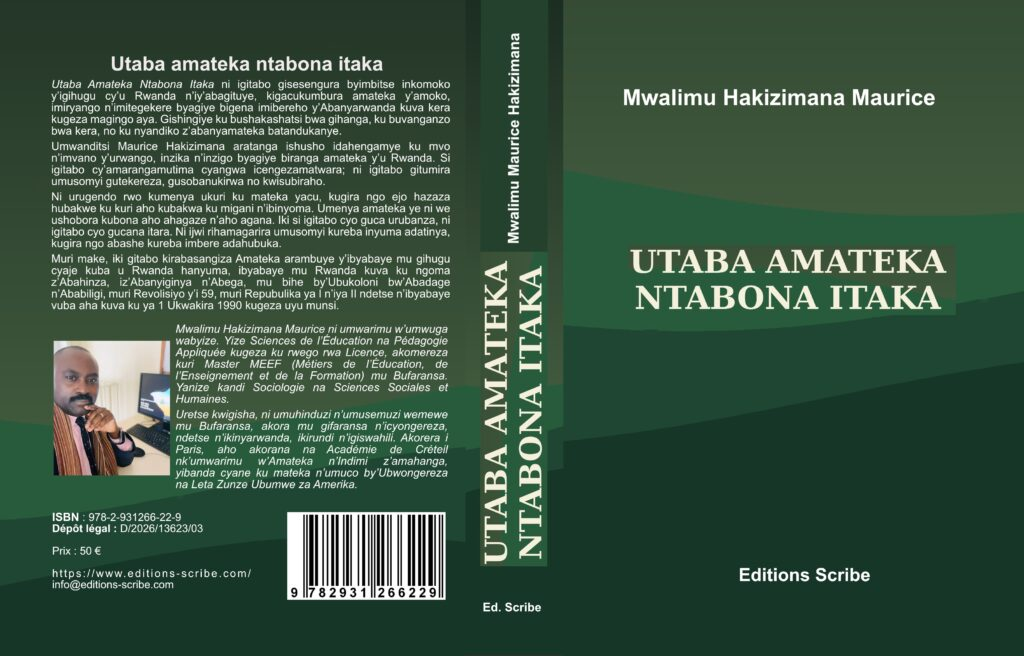
Professor Hakizimana Maurice is the author of the book “UTABA AMATEKA NTABONA ITAKA” (Editions Scribes).
PUB
TIDAS – Translation, Interpreting & Support for Your Asylum and Residency Procedures in France
Welcome to TIDAS (Translation, Interpreting, and Asylum & Residency Assistance in France).Our mission: to help foreigners in France overcome language barriers and administrative obstacles.
Our services:
Translation and interpreting for your appointments and documents
Support with asylum applications
Assistance with all your administrative procedures
With TIDAS, you benefit from a professional, caring, and reliable service.We believe that everyone deserves to be understood and supported.
Contact us today and let’s move forward together at (+33) 07 58 90 35 49 or email us at tidasetvous@gmail.com
TIDAS :
- “TIDAS – Always by Your Side”
- “The Voice of Foreigners in France”
- “Understand, Translate, Support”