Prof HAKIZIMANA Maurice
Between cooperation, investment, training, diplomatic influence and political prestige, have Rwanda, Burundi and the Democratic Republic of the Congo truly benefited from their membership in the International Organisation of La Francophonie?
Introduction: What Is the Purpose of Belonging to the Francophonie?
The International Organisation of La Francophonie (OIF) occupies an important position in international relations. Established on 20 March 1970 in Niamey, Niger, it brings together states and governments united, to varying degrees, by the use of the French language and a shared commitment to political, economic, educational and cultural cooperation.
For African countries, which constitute a major component of this community, membership in the organisation offers opportunities for international cooperation, diplomatic visibility and access to various development programmes.
However, an important question deserves to be asked: What does a country such as Rwanda, Burundi or the Democratic Republic of the Congo actually gain from belonging to the OIF?
Beyond international summits, official statements, handshakes between heads of state and speeches about Francophone solidarity, what benefits does membership bring to ordinary citizens?
Can a student gain access to more training opportunities? Can a teacher benefit from professional development programmes? Can an entrepreneur find new partners? Can an artist access international distribution networks?
In other words, is the Francophonie a genuine development instrument for populations, or does it remain, in some cases, essentially a diplomatic and institutional forum?
This question is all the more relevant because member states attach considerable importance to the appointment of the organisation’s Secretary General. The position generates diplomatic competition that sometimes appears to go beyond the simple desire to promote the French language.
To understand what is at stake, it is necessary to examine what the OIF offers in practical terms, the results achieved in certain African countries, and the reasons why leading the organisation has become such an important political and diplomatic issue.
Follow us on WhatsApp: https://whatsapp.com/channel/0029VaCyM5ILdQejDYwQ2b2u and on Facebook: https://www.facebook.com/professormaurice/
1. The OIF: Much More Than an Association of French-Speaking Countries
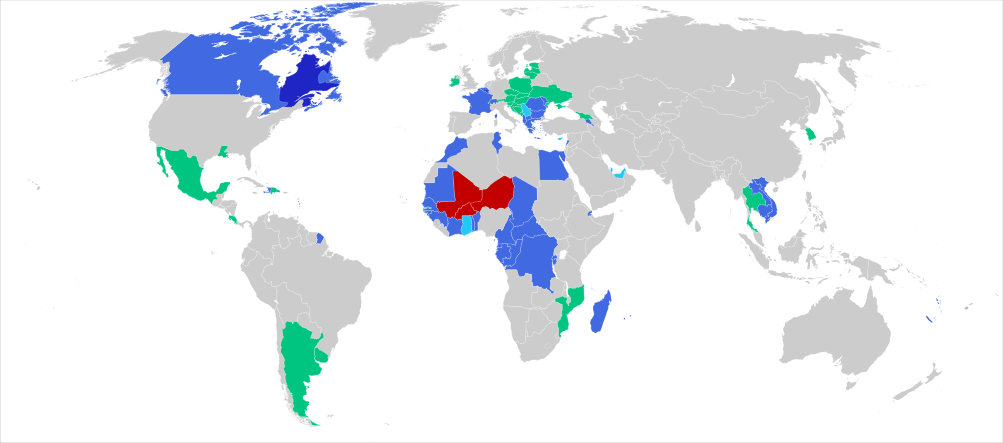
Reducing the International Organisation of La Francophonie to an association of countries that speak French would be a mistake.
Over time, the organisation has developed a political and institutional dimension. Its activities extend far beyond linguistic issues. They include education, vocational training, culture, democracy, human rights, governance, economic cooperation and sustainable development.
Its missions are mainly structured around four broad priorities:
- Promoting the French language, multilingualism and cultural diversity;
- Promoting peace, democracy and human rights;
- Supporting education, training, higher education and research;
- Contributing to the development of economic and sustainable cooperation.
The organisation therefore serves as a multilateral network through which states can exchange experiences, develop partnerships and mobilise technical resources.
Read also:Francophonie: Is It on the Brink of Fragmentation? and Francophonie: The Words That Can Heal Its Wounds
For an African country, membership can provide an additional gateway to the world. It allows the country to participate in international discussions, develop relations with other governments and benefit from programmes that might not necessarily be accessible under the same conditions outside this framework.
However, it is important to distinguish between an institutional opportunity and an actual benefit. Being a member of the OIF does not automatically mean receiving funding, scholarships or investment.
The benefits depend, among other things, on the programmes available, the projects submitted, the partnerships established and the ability of national institutions to take advantage of these opportunities.
The real question, therefore, is not simply whether the OIF offers opportunities, but also whether member states know how to turn them into tangible results.
2. What Does Membership in the OIF Actually Bring?
2.1. Education: Training Teachers and Improving Education
Education is one of the areas in which Francophone cooperation can have a direct impact on populations.
Member countries can benefit from teacher-training programmes, cooperation between educational institutions, pedagogical exchanges and support for education policies.
For Rwanda, Burundi and the DRC, whose education systems face significant challenges in terms of teaching quality, teacher training and access to educational resources, these opportunities deserve particular attention.
The Francophone Initiative for Distance Training of Teachers (IFADEM), jointly implemented by the OIF and the Agence universitaire de la Francophonie (AUF), is a concrete example of this cooperation.
The results published by the Institut de la Francophonie pour l’éducation et la formation are significant. In the Democratic Republic of the Congo, the programme reports 8,100 teachers trained and 100 education officials. In Burundi, it reports 2,360 teachers trained and 340 education officials.
These figures give Francophone cooperation a tangible dimension. Behind the statistics are teachers who have strengthened their skills, schools that have benefited from educational resources and pupils who may now receive more appropriate teaching.
But one question remains: Do these training programmes lead to lasting improvements in classrooms? Are the acquired skills shared across schools? Can pupils actually see an improvement in the quality of their education?
These are the indicators through which the real value of cooperation should be measured.
2.2. Higher Education: Opening Up New Opportunities for Students
Membership in the Francophonie can also facilitate university cooperation.
The Agence universitaire de la Francophonie coordinates an extensive network of higher education and research institutions. It contributes in particular to academic mobility, scientific research, training and innovation.
For a Rwandan, Burundian or Congolese student, these networks can offer opportunities to collaborate with universities in other countries. This may take the form of joint research projects, specialised training, university exchanges or access to international scientific networks.
However, it would be misleading to suggest that every student from a member country automatically receives a scholarship or an opportunity to study abroad. Each programme has its own selection criteria and access requirements.
The challenge for governments, therefore, is to provide students with better information and strengthen the mechanisms that enable national institutions to participate in these programmes.
2.3. The Economy: Opportunities That Need to Be Seized
The economy is another area in which the Francophonie can have strategic value.
African countries are seeking to diversify their trading partners, attract investment, support their businesses and gain access to new markets.
The OIF can contribute to this process by facilitating business meetings, exchanges of experience, cooperation between companies and support for development projects.
It can also encourage discussions on entrepreneurship, the digital economy, innovation and sustainable development.
For Rwanda, Burundi and the DRC, the benefits are clear: all three countries need to strengthen their economic capacities, develop their businesses and expand their international partnerships.
However, diplomatic visibility should not be confused with economic development.
Participation in a Francophonie summit does not guarantee job creation. Nor does having a national representative at the head of the organisation guarantee that investment will flow into that person’s home country.
For cooperation to produce results, it must lead to identifiable projects, sustained partnerships and measurable benefits.
2.4. Culture: Bringing African Talent to the World
The Francophone community also represents a significant cultural and linguistic market.
African writers, filmmakers, musicians, journalists, artists and producers can benefit from cooperation networks, cultural events and initiatives promoting linguistic diversity.
For artists from Rwanda, Burundi and the DRC, this openness can facilitate the circulation of their work and help them reach new audiences.
The Francophonie should therefore not be exclusively an affair of presidents, ministers and diplomats. It should also be a space in which creators, intellectuals and cultural professionals can find opportunities for development.
2.5. Diplomacy: Having a Stronger Voice and Greater Collective Influence
An African country acting alone may have limited influence in certain international negotiations.
By participating in a multilateral organisation, it can defend its positions, build alliances and contribute to joint declarations.
The OIF therefore provides an additional framework for diplomatic dialogue.
For countries such as Burundi, Rwanda and the DRC, this dimension can be particularly important in an international context where alliances, partnerships and power relations play a decisive role.
However, Francophone solidarity does not mean that member states always share the same interests. They may defend different positions and even disagree on major political issues.
The Francophonie is therefore also a space in which differences should be discussed and dialogue should help prevent diplomatic breakdowns.
3. Ten Years of Cooperation: What Measurable Results Have Been Achieved in Rwanda, Burundi and the DRC?
To assess the usefulness of the OIF, it is not enough to list its missions. We must also examine what has actually been achieved on the ground.
Publications by the OIF and its partner institutions identify several results in the three countries, particularly in education, vocational training, women’s empowerment and digital development.
The figures presented below come from different programmes and reference periods. They do not constitute a consolidated financial assessment of the last ten years, but they help identify documented achievements.
3.1. Rwanda: Thousands of Beneficiaries and Stronger Educational Cooperation
Rwanda offers several examples of Francophone cooperation in education, women’s empowerment and digital development.
In its press dossier covering projects for 2024–2025, the OIF announces ten projects implemented in the country and nearly 58,000 direct beneficiaries, including more than 18,700 young people and over 3,400 women.
The programme for the mobility of volunteer teachers of and in French is one of the most visible initiatives. According to the figures presented by the OIF, nearly 36,000 teachers and pupils are reported to have benefited from this programme.
These achievements are complemented by eleven projects under the La Francophonie avec Elles fund, which reached 1,648 women, as well as digital training activities and initiatives to strengthen institutional capacities.
The Francophone Initiative for Distance Training of Teachers also trained 77 education personnel according to the figures for 2024–2025.
These results demonstrate that Francophone cooperation is not limited to diplomatic representation. It also operates within schools, civil society organisations and development initiatives.
For the Rwandan population, this means opportunities for training, initiatives supporting women’s economic independence and programmes designed to improve professional skills.
Nevertheless, it remains necessary to distinguish between the results of the various programmes and to verify their long-term impact.
3.2. Burundi: Education and Reading at the Heart of Cooperation
Burundi has an interesting history of educational cooperation with the OIF and its partner institutions.
The country profile published by the Institut de la Francophonie pour l’éducation et la formation records 2,360 teachers trained through IFADEM and 340 trained education officials.
Seven digital learning spaces have also been established, and seven educational booklets have been developed.
More recently, the SOMAWIGE project, supported by the OIF, involved fifty schools and more than 60,000 pupils.
One hundred (100) teachers were trained to supervise reading activities, with the involvement of twelve trainers.
This is an interesting achievement because it directly concerns pupils and teachers, rather than merely institutional officials.
In the environmental sector, the Institut de la Francophonie pour le développement durable supported the training of fifty Burundian stakeholders in December 2024 on the design of climate projects.
This training made it possible to prepare three projects with a combined projected budget of €39 million, intended to seek international funding.
However, it should be emphasised that these €39 million represent funding being sought, not money that has already been transferred to Burundi.
Burundi’s record therefore shows that Francophone cooperation can contribute to strengthening educational skills, promoting reading and preparing environmental projects.
This interruption raises an important question about the concrete consequences of institutional tensions on programmes intended for the population.
3.3. The DRC: Teacher Training, Digital Technology and Skills Development
The Democratic Republic of the Congo has recorded particularly interesting achievements in teacher training and the development of digital skills.
According to the IFEF country profile, the IFADEM programme has enabled 8,100 teachers and 100 education officials to receive training.
It has also contributed to the provision of 11,200 books and educational materials, as well as the installation of digital equipment and learning spaces.
The ELAN programme, which focuses on bilingual education, reports having reached more than 3.75 million pupils through 35 schools, the training of 135 teachers and the adaptation of 168 educational materials.
It has notably contributed to the development of teaching resources in four national languages: Lingala, Kikongo, Kiswahili and Tshiluba.
The figure of more than 3.75 million pupils is particularly significant. However, it should be presented as the number of pupils reported to have been reached by the programme, rather than as the number of pupils who each personally received training.
In the digital sector, two documented cohorts of the D-CLIC programme trained 86 young people in digital marketing and another 44 in web and mobile web development.
These training programmes were organised in particular in Kinshasa, Goma and Lubumbashi.
Francophone cooperation is therefore not limited to teaching French. It also contributes to access to digital skills, vocational training and the promotion of national languages.
For a country as vast and populous as the DRC, these programmes can represent valuable development tools, provided their reach is expanded and their results are assessed over time.
3.4. What Do These Figures Tell Us?
The achievements presented show that the OIF and its implementing agencies have indeed contributed to concrete initiatives in all three countries.
They allow us to move beyond institutional rhetoric and recognise that teachers have been trained, pupils have benefited from educational projects, young people have acquired digital skills and women have received support through economic initiatives.
However, these figures must be interpreted with caution.
Some represent cumulative results over several years, while others concern a single year or a specific project.
Some beneficiaries are pupils indirectly reached by a programme, whereas others have personally attended training courses.
It would therefore be incorrect to add all these figures together and announce a total number of beneficiaries without checking for possible duplication.
It would also be premature to use them to determine the total amount invested in each country.
The results are real and documented across several programmes, but a comprehensive financial assessment of ten years of cooperation has yet to be established.
4. Why Are States So Eager to Lead the OIF?
After examining the benefits countries can derive from their membership in the Francophonie, another question deserves our attention: Why does leading this organisation generate so much interest?
The position of Secretary General of the Francophonie is not merely honorary. It carries significant institutional and diplomatic responsibilities.
According to the Charter of the Francophonie, the Secretary General leads the organisation’s political action. He or she serves as its spokesperson and official representative at the international level.
The Secretary General also coordinates multilateral cooperation and plays a role in preparing and implementing programmes.
This position has several dimensions.
4.1. International Prestige
When a national of a particular country becomes Secretary General of the OIF, that country naturally benefits from special international visibility.
Having one of its citizens at the head of a multilateral organisation can be presented as recognition of its diplomatic commitment and its position in international relations.
For an African country, this visibility can help strengthen its image among international partners.
4.2. Diplomatic Influence
Leading an international organisation makes it possible to participate actively in defining its priorities and representing its positions.
The Secretary General has an international platform and maintains relations with heads of state, governments, international institutions and Francophone partners.
For a country seeking to strengthen its diplomatic influence, having one of its citizens occupy this position represents an important element of visibility and representation.
However, the Secretary General is not the permanent representative of his or her country of origin within the organisation.
Once appointed, the Secretary General must exercise these responsibilities in the interests of all members and respect the collective orientations of the OIF.
4.3. Institutional Influence and Cooperation
The position also involves responsibilities relating to the direction and coordination of cooperation programmes.
The Secretary General plays a role in defining priorities, coordinating partnerships and allocating cooperation resources, in accordance with the decisions of the competent bodies.
This explains why states may attach particular importance to the position.
Nevertheless, it would be excessive to claim that the Secretary General’s country of origin automatically receives preferential treatment.
The existence of institutional responsibilities does not constitute proof of national favouritism.
The relevant question is rather one of transparency:
Are programmes allocated according to objective criteria? Do member states have equal access to the available mechanisms? Are results published and evaluated?
4.4. Political Visibility
Finally, leading the OIF can strengthen a country’s symbolic presence in major international discussions.
For African states, this dimension is not insignificant. It forms part of a broader demand for greater African representation in international institutions.
Is having an African at the head of an international organisation sufficient if African populations do not benefit more from that organisation’s programmes?
Representation matters, but it should not become an end in itself.
5. The Case of Louise Mushikiwabo: When Leading the OIF Becomes a Diplomatic Issue
Rwanda provides a particularly interesting example for understanding the issues surrounding the leadership of the Francophonie.
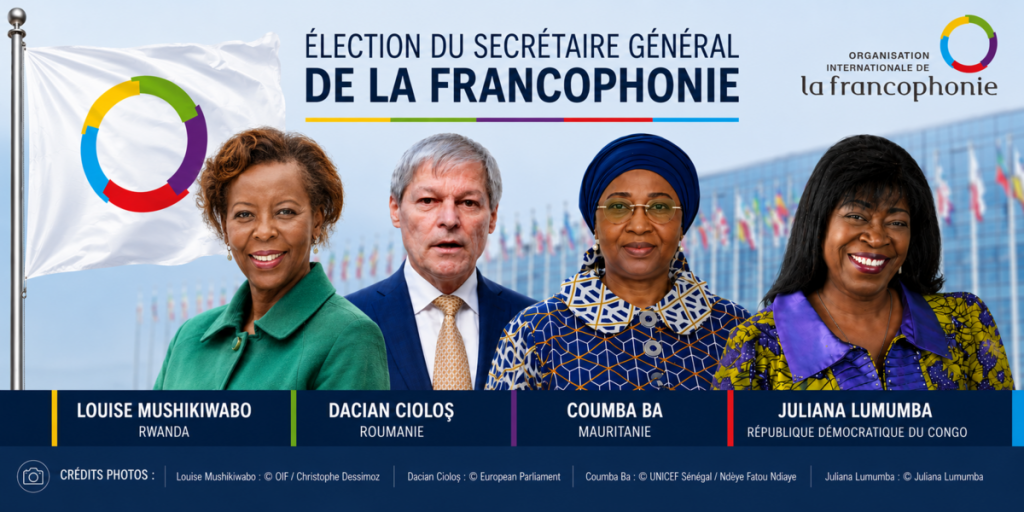
Louise Mushikiwabo, former Rwandan Minister of Foreign Affairs, was elected Secretary General of the Francophonie in October 2018 at the Yerevan Summit in Armenia.
She took office in January 2019 and was reappointed for a second term in 2022 at the Djerba Summit in Tunisia.
Her presence at the head of the organisation gave Rwanda considerable institutional visibility within the Francophone community.
However, Louise Mushikiwabo’s record should be assessed in terms of her responsibilities, the organisation’s achievements and the programmes actually implemented, rather than solely on the basis of the nationality of the person holding the position.
6. How Much Does the OIF Actually Invest in These Countries?
The achievements presented above show that Francophone cooperation produces identifiable results.
But they do not yet answer an essential question: How much money does the organisation actually invest in each of these countries?
This is where the assessment becomes more complicated.
The available documents present beneficiaries, training programmes, projects and sector-specific results. However, they do not yet make it possible to establish a consolidated financial assessment covering the entire 2016–2026 period for Rwanda, Burundi and the DRC.
In particular, it would be necessary to distinguish between:
- The OIF’s own financial contributions;
- Funding provided by the Agence universitaire de la Francophonie;
- Programmes implemented by the Institut de la Francophonie pour l’éducation et la formation;
- Activities carried out by the Institut de la Francophonie pour le développement durable;
- Projects co-funded by international partners;
- Contributions from governments and local organisations.
This distinction is essential.
A programme implemented in a country with the support of several institutions cannot be entirely counted as direct OIF funding.
The Burundian climate projects provide a revealing example: three projects representing €39 million were prepared, but this amount refers to funding being sought, not funds already received.
Similarly, the regional results of an environmental programme cannot be attributed entirely to the DRC.
We must therefore distinguish between money invested, money mobilised, money requested and results achieved.
Such transparency should be a normal requirement for any international organisation involved in public policies and the development of populations.
7. How Can We Measure the Real Value of the OIF for African Populations?
Membership in an international organisation should be assessed through observable results.
For African countries, several indicators could be used.
In education:
- How many teachers have benefited from training financed or supported by the OIF?
- How many students have received scholarships or participated in mobility programmes?
- Do schools and universities have access to new educational resources?
- Have cooperation programmes contributed to improving learning outcomes?
In the economic sector:
- How many business partnerships have been facilitated?
- Have local companies gained access to new markets?
- Have projects helped create jobs?
- Have entrepreneurs and young people benefited from training and support?
In the cultural sector:
- Do writers, musicians and artists have greater access to Francophone networks?
- Are African cultural works more widely distributed internationally?
- Are national languages and local cultural expressions sufficiently promoted?
In governance and diplomacy:
- Do member countries benefit from effective institutional support?
- Do crisis-prevention mechanisms and political dialogue produce results?
- Can citizens observe progress in transparency and the functioning of institutions?
These questions are not intended to condemn the OIF. Rather, they apply the normal requirements of accountability and effectiveness.
The organisation must be able to report on its results, but national governments also have a responsibility: to inform their citizens, present the opportunities available and demonstrate how they use the cooperation instruments to which they have access.
Conclusion: Should the Francophonie Be an Affair of Leaders or an Opportunity for the People?
The question deserves to be asked directly: What is the point of belonging to the International Organisation of La Francophonie if ordinary citizens cannot perceive any tangible benefits from that membership?
States are fully entitled to seek prestige, visibility and diplomatic influence. They may also wish to see their nationals appointed to the highest positions within international organisations.
But these ambitions should remain at the service of a more important objective: the progress and well-being of populations.
For a student in Bujumbura, Kigali or Kinshasa, the Francophonie should represent more than a summit held in a foreign capital.
It should open up opportunities for training, research and mobility.
For a teacher, it should provide a means of improving professional skills and teaching practices.
For an entrepreneur, it should offer opportunities to develop partnerships.
For an artist, it should provide a chance to showcase talent beyond national borders.
The documented results in Rwanda, Burundi and the DRC show that this cooperation is not entirely theoretical.
Teachers have been trained, schools have benefited from educational programmes, young people have acquired digital skills and women have received support through economic initiatives.
The true success of a country within the OIF should not be measured solely by its ability to have one of its nationals elected to lead the organisation, but also by its ability to transform membership into genuine opportunities for its citizens.
Sources and Documentary References
- OIF – Overview, Missions and Organisation: General framework and missions of the organisation.
- OIF – Responsibilities of the Secretary General: Institutional and political responsibilities.
- OIF – Deployment of the Third Cohort of Volunteer Teachers in Rwanda, October 2025: A concrete example of cooperation.
- OIF – 2025 Annual Review: Results of cooperation programmes.
- OIF – Closing of the 20th Phnom Penh Summit, 16 November 2026: Decision concerning the succession to the leadership of the organisation.
- TV5MONDE / AFP – Postponement of the Secretary General Election: Diplomatic context and disagreements between Rwanda and the DRC.

About the Author
Mwalimu Hakizimana Maurice is a teacher, interpreter-translator and writer based in Paris, France. He is the founder and owner of the information and educational platform Eurêka Academy Studio, also available on YouTube under the name Eurêka Studio TV.
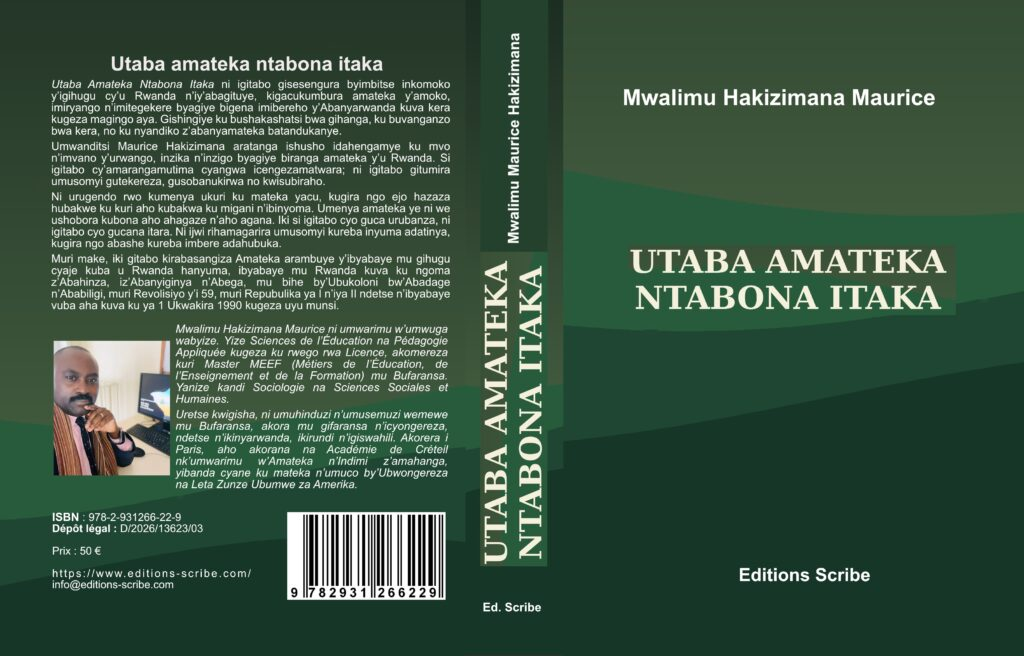
Professor Hakizimana Maurice is the author of the book “UTABA AMATEKA NTABONA ITAKA” (Editions Scribes).
Don’t miss any of the latest publications and updates from Eurêka Academy Studio, available here on our website and on YouTube through Eurêka Studio TV.
PUB
TIDAS – Translation, Interpreting & Support for Your Asylum and Residency Procedures in France
Welcome to TIDAS (Translation, Interpreting, and Asylum & Residency Assistance in France).Our mission: to help foreigners in France overcome language barriers and administrative obstacles.
Our services:
Translation and interpreting for your appointments and documents
Support with asylum applications
Assistance with all your administrative procedures
With TIDAS, you benefit from a professional, caring, and reliable service.We believe that everyone deserves to be understood and supported.
Contact us today and let’s move forward together at (+33) 07 58 90 35 49 or email us at tidasetvous@gmail.com
TIDAS :
- “TIDAS – Always by Your Side”
- “The Voice of Foreigners in France”
- “Understand, Translate, Support”