Author: HAKIZIMANA Maurice
According to certain rumours, next Friday, November 13, will mark the “end of the world.” In various parts of the world, particularly in major media outlets and on social media platforms, especially in Arab countries, an alleged prophecy predicting the end of the world on Friday, November 13, 2026, is being widely circulated.
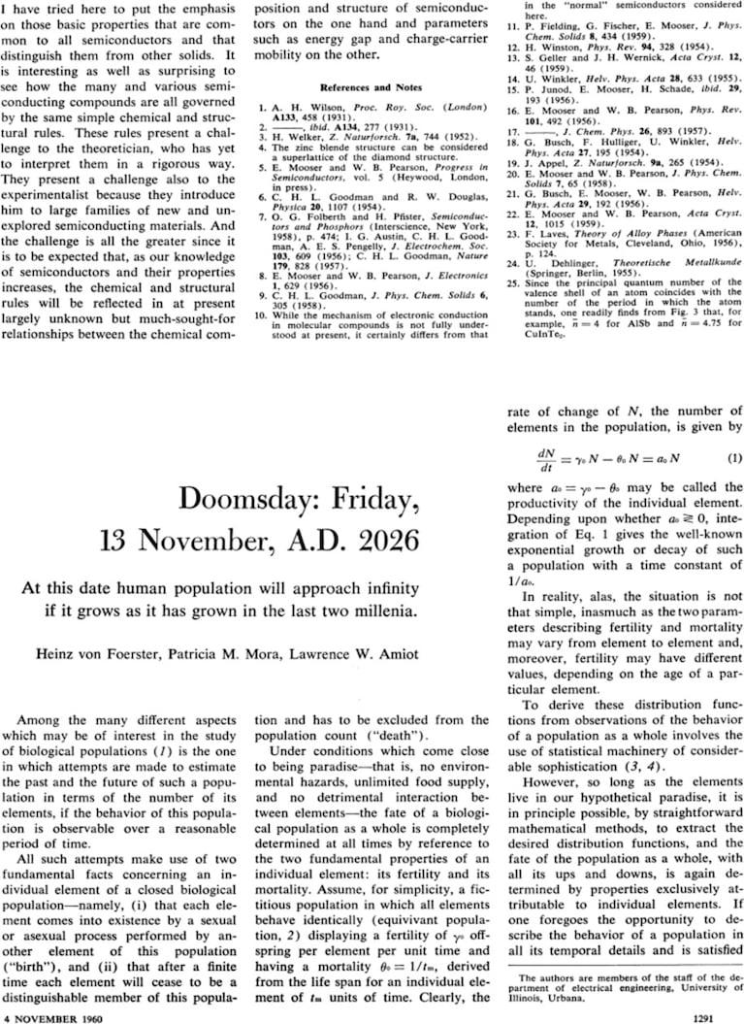
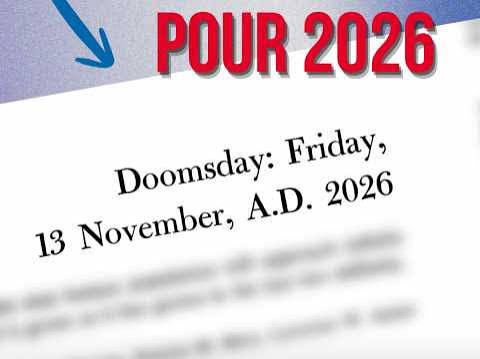
This prediction is said to have been made 66 years ago, not by religious leaders, but allegedly by scientists. The supposed prophecy was reportedly first published by three researchers in the American scientific journal Science on November 4, 1960, under the title: “The Doomsday: Friday, November 13, 2026.”
Follow us on WhatsApp: https://whatsapp.com/channel/0029VaCyM5ILdQejDYwQ2b2u and on Facebook: https://www.facebook.com/professormaurice/
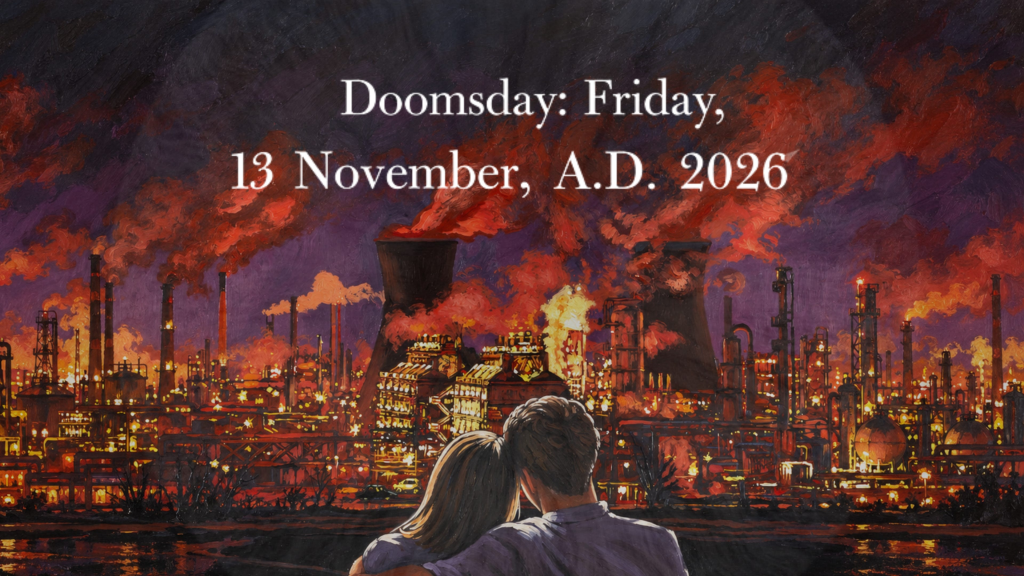
(1) The End of the World on November 13, 2026: Who Predicted It?
It all began with an Austrian-born American scientist and physicist, Heinz von Foerster. He conducted his research in collaboration with Patricia Mora and Lawrence Amiot, while all three were working at the University of Illinois in the United States.
These three researchers relied on 24 statistical data points representing the world’s population at different periods throughout history, from the years following the birth of Jesus Christ (the Common Era) up to 1958, in order to understand how the human population had evolved over the centuries.
They developed a mathematical model illustrating what is known as hyperbolic growth. What does this expression mean? It indicates that not only does the population increase, but the rate of that increase also accelerates over time.
Based on their calculations, the researchers concluded that their model pointed to what is known as a “singularity” in 2026, more precisely around mid-November. According to their projections, November 13, 2026, would therefore correspond to the date on which the world’s population would reach a mathematically infinite value, provided that population growth continued indefinitely at the rate described by their model.
(2) Did These Researchers Actually Predict the End of the World on November 13, 2026?
No. Nowhere do these scientists claim that the world will end on that date. They never announced that a gigantic asteroid would strike the Earth, that the Sun would explode, or that powerful earthquakes or volcanic eruptions would destroy the planet on that particular day. Nor did they establish a date on which humanity would disappear as a result of natural disasters or geological events.
Why, then, did they use the expression “The Doomsday: Friday, November 13, 2026”?
This expression was intended to illustrate the mathematical findings of their research. According to their model, the growth of the world’s population would reach a mathematically infinite value.
In other words, this “infinite value” does not represent an actual number of people who would have inhabited the Earth. Rather, it is a mathematical result obtained by extending a given forecasting model into the future, based on the assumption that the initial conditions and observed trends would never change.
Furthermore, a careful reading of their study shows that the researchers did not consider this date to be a certain deadline by which their predictions would necessarily come true. They explained that several factors could alter their projections, including environmental policies, the way remaining natural resources would be exploited, and changes in human behaviour concerning the balance between birth rates and death rates.
They therefore emphasised that developments in the world between that period and 2026 could alter their projections concerning reproduction and the overall trajectory of population growth.
(3) In 1964, Michel Takla Revisited This Study, Claiming That the World Would End on November 13, 2026
Among the media publications resurfacing in recent days is an excerpt from an article published on November 29, 1964, in the Egyptian newspaper Watani. The article, written by Michel Takla, an Egyptian journalist or columnist, claimed that the world would end on November 13, 2026.
Takla’s 1964 article is now being associated with the scientific study led by Heinz von Foerster in 1960, with additional material and interpretations. This version is circulating widely around the world, particularly in Arab countries, from Egypt to Yemen. However, this is an interpretation that does not accurately reflect the historical facts.
Heinz von Foerster’s 1960 study is an independent scientific work. It should not be attributed to Michel Takla.
(4) The Predicted Ends of the World in 1914, 1925, 1975 and 2000 Never Happened
Throughout the history of religions and movements that interpret biblical prophecies, there have been various periods during which certain people announced that the end of the world or the end of the present wicked system of things would occur on specific dates. Among the dates most frequently mentioned are 1914, 1925, 1975 and 2000.
1) October 1, 1914: The End of the Gentile Times
This date originated in the teachings of Pastor Charles Taze Russell, one of the founders of the Bible Students movement, from which the organisation of Jehovah’s Witnesses emerged.
In 1876, Russell began teaching that the Gentile Times would end in 1914. This teaching was based on an interpretation of the prophecy in Daniel, chapter 4, in which a prophetic period of 2,520 years was used to calculate the chronology.
Publications issued before 1914 indicated that this year would mark the end of human governments and the complete establishment of God’s Kingdom on Earth.
The anointed members of the group, chosen by King Jesus, were preparing to ascend to heaven, being transformed in an instant, in order to reign with Jesus.
In 1914, the First World War broke out. However, the end of the world, as they had imagined it, did not occur.
Subsequently, the teachings of the Bible Students evolved. They explained that 1914, rather than being the year of the end of the world, was the year in which Jesus Christ began ruling in heaven. It also marked the beginning of the period known as the “last days.”
Thus, the date remained part of their teachings, but the interpretation of what was supposed to happen that year changed.
2) The Year 1925: The Resurrection of Abraham, Isaac and Jacob
Following the death of Charles Taze Russell in 1916, Joseph Franklin Rutherford took over the leadership of the Watch Tower Bible and Tract Society.
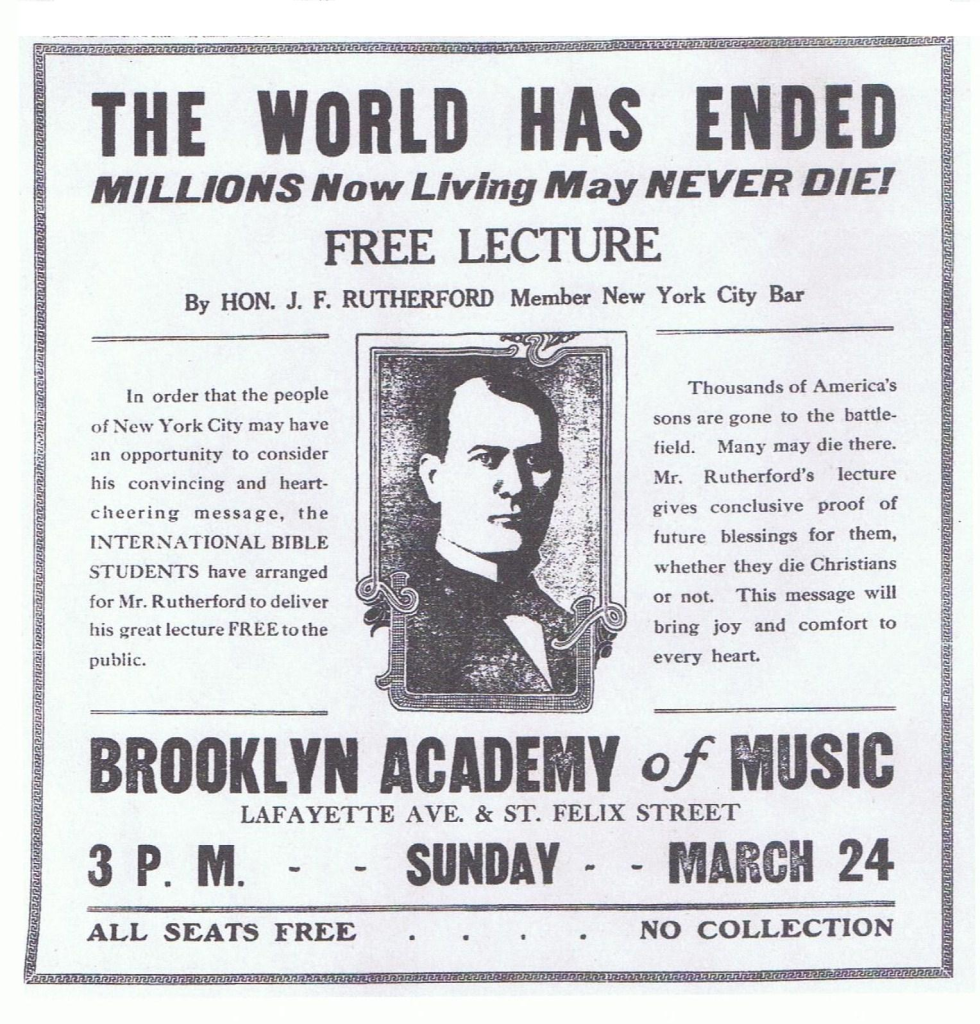
In 1920, a book entitled Millions Now Living Will Never Die was published.
The book announced that 1925 would be a significant milestone in the fulfilment of God’s purpose. More specifically, Abraham, Isaac, Jacob and other faithful men of ancient times were expected to be resurrected and return to life on Earth.
In the September 1, 1922 issue of The Watch Tower, the year 1925 was presented as being more clearly established by the Scriptures than 1914.
In 1929, Rutherford purchased a residence in San Diego, California, known as Beth Sarim. The property was intended to accommodate these faithful men of ancient times when they were resurrected.
However, 1925 came to an end without the resurrection of Abraham, Isaac or Jacob taking place.
In the following years, the organisation’s publications revisited this issue, explaining that some Bible Students had placed particularly high expectations on the events they hoped would take place that year.
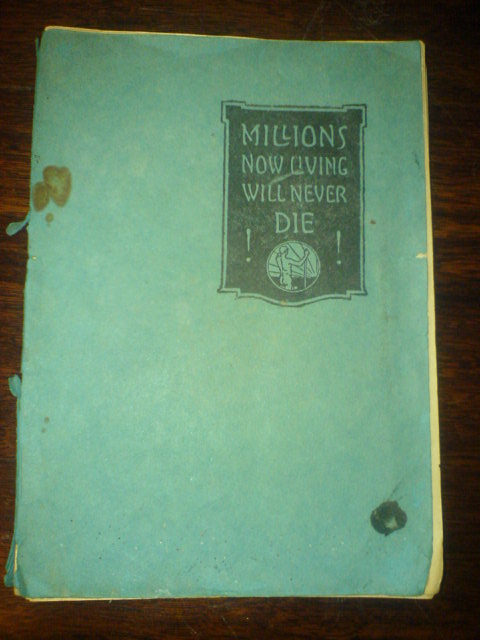
This booklet announced that Abraham, Isaac and Jacob would be resurrected and return to Earth in 1925, thereby marking the beginning of the New World.
3) The Year 1975: The End of 6,000 Years of Human History
During the 1960s, Jehovah’s Witnesses’ publications began focusing particularly on calculating the 6,000 years since the creation of the first man, Adam.
In the book Life Everlasting—in Freedom of the Sons of God, published in 1966, a chronological calculation indicated that 6,000 years of human history would come to an end in 1975.
In the August 15, 1968 issue of The Watchtower, an article explained that these 6,000 years would end in 1975 and raised questions about the events that might follow this milestone.
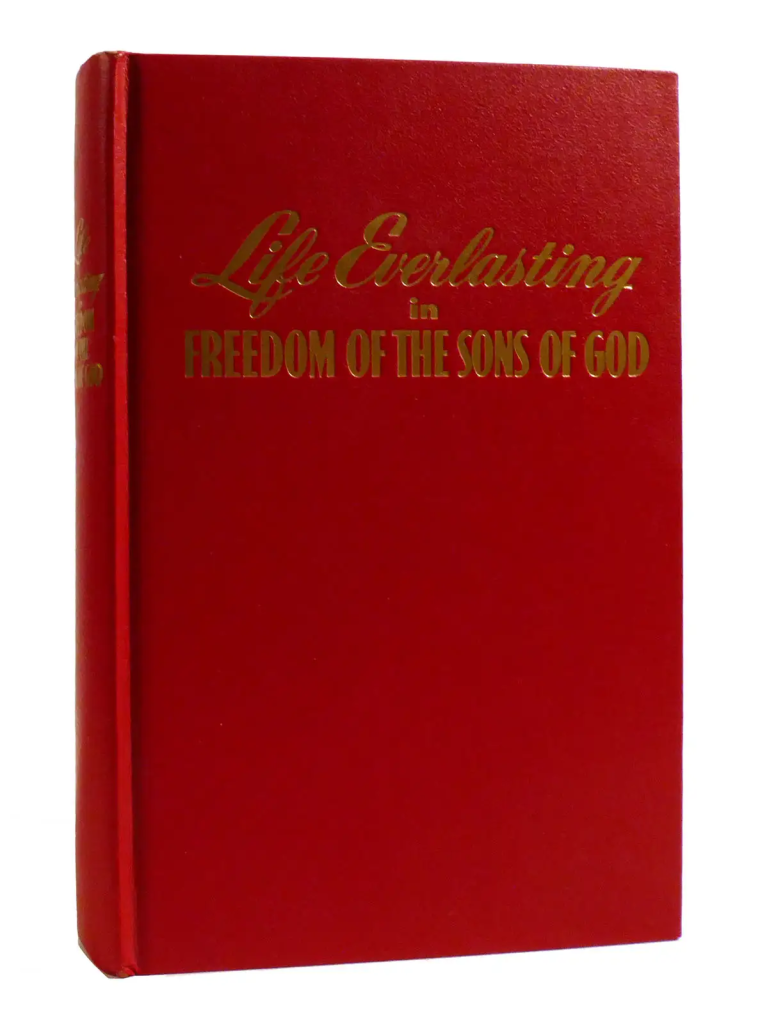
The book presented calculations suggesting that 6,000 years would have elapsed between the creation of the first man, Adam, and the year 1975, corresponding to the six days of creation. After this period, during the seventh day, a major event was expected to take place on Earth.
Although the Governing Body of Jehovah’s Witnesses had warned at the time that no one knew the exact day or hour, the wording used in certain publications and at meetings led many Witnesses to believe that the end could come in 1975 and that it was imminent, perhaps only a few months or even a very short time away.
Some sold their homes, while others abandoned or postponed certain long-term projects in order to devote more time to the preaching work.
But 1975 came and went. The world did not end, and people were not ushered into the New World they had been expecting.
In the March 15, 1980 issue of The Watchtower, the organisation of Jehovah’s Witnesses eventually acknowledged that some of the wording used had created expectations among believers that went beyond what the biblical evidence justified.
This acknowledgement was expressed, among other things, in the following words: “It is regrettable that some published statements have raised unjustified expectations.”

This issue of The Watchtower stated: “It is regrettable that some published statements have raised unjustified expectations.”
4) The Year 2000: The End of the World and the New Millennium
The year 2000 also brought widespread fears and speculation about the end of the world.
Some religious movements and various authors making prophetic claims asserted that the year 2000 would be marked by the return of Jesus Christ, the Rapture of believers into heaven, the Battle of Armageddon, or other major events that would transform the world.
These concerns were mainly linked to interpretations of certain signs described in the book of Revelation, which some people associated with the beginning of a new millennium.
For example, the American writer Hal Lindsey, in his book Planet Earth 2000 A.D.: Will Mankind Survive?, published in 1996, expressed serious concerns about the future of humanity after the year 2000.
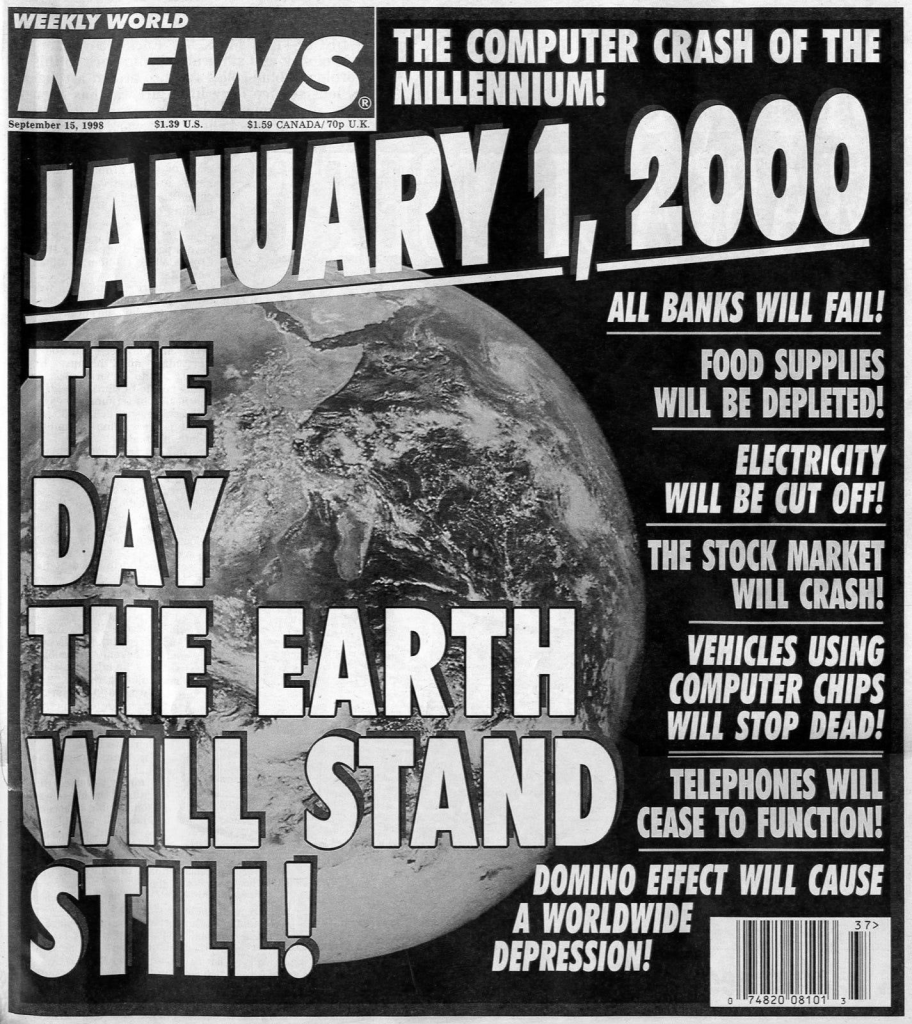
Another factor that fuelled people’s fears was the computer problem known as the Year 2000 bug, or Y2K.
This problem arose because many computers used only two digits to represent the year. There were fears that when the year changed from 1999 to 2000, these computers might interpret 2000 as 1900.
People feared that this could cause serious disruptions to banks, electricity networks, aviation, telecommunications and other essential services.
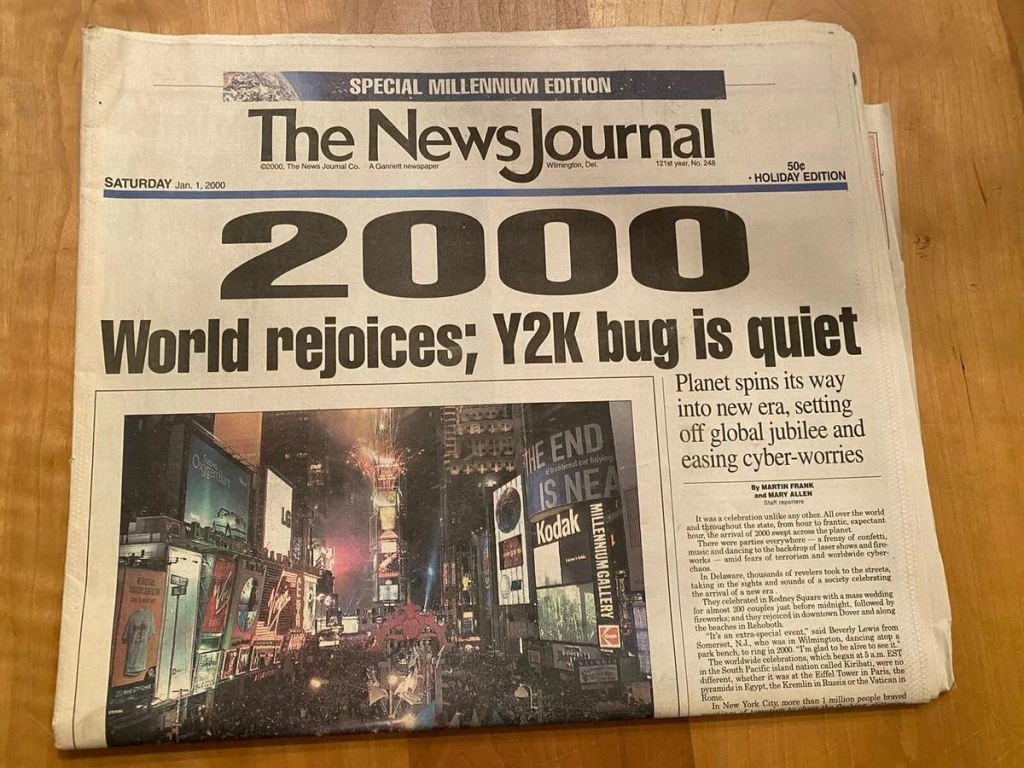
Yet the year 2000 arrived and came to an end without any catastrophe signalling the end of the world.
Some minor computer malfunctions did occur, but there was no widespread collapse of global systems, contrary to what some people had feared.
(5) Predicted End-of-the-World Dates That Never Came to Pass: A Summary
| Year | What Was Expected | What Actually Happened |
|---|---|---|
| 1914 | The end of the Gentile Times, the ascension of the anointed to heaven to reign with Jesus, a major transformation of earthly governments and the establishment of God’s Kingdom on Earth. | The First World War broke out, but the world did not end. |
| 1925 | The resurrection of Abraham, Isaac and Jacob and the beginning of a new era on Earth. | None of these events took place. |
| 1975 | The end of 6,000 years of human history. Some expected the end of the world to follow. | None of these events took place. |
| 2000 | The return of Christ, Armageddon, disasters or the collapse of computer systems. | None of these events took place. |
(6) What Lessons Can We Learn from This History?
A lesson for Bible readers: We should learn to distinguish between biblical prophecies themselves and the interpretations or analyses given to them by religious leaders or individuals.
The fact that someone interprets a Bible passage and links it to a specific date does not automatically mean that God revealed that date to them.
Furthermore, those of you who read the Bible are surely familiar with Matthew 24:36, where Jesus stated that concerning that day and hour, no one knows except the Father.
Therefore, anyone who sets a date or claims to have received that date through a revelation from God is attributing to God a statement that, according to the Bible, He has not made.
Basing one’s faith on specific dates carries a risk: when the expected date arrives and nothing happens, one may become disappointed, stop searching for the truth or even lose one’s faith.
The history of 1914, 1925, 1975 and 2000 shows that, at different times, people have attempted to match biblical prophecies with specific dates.
After religious interpretations came supposedly scientific predictions.
Whether we are talking about the Bible, religion or even the work of a scientist, none of these can provide you with the exact date on which this world, as a whole, will come to an end.
But perhaps another question deserves to be asked: Is this world really destined to disappear?
Allow me, too, to consult the Bible. Ecclesiastes 1:4 states:“One generation is going, and another generation is coming, but the earth remains forever.”
Sources and Documentary References
- TIME Magazine – Top 10 End-of-the-World Prophecies: A retrospective examining major predictions about the end of the world, including fears associated with the year 2000.
- Smithsonian Institution – Y2K: The Year 2000 Computer Bug: Explains the technical origins of the Y2K problem and the potential risks to banks, telecommunications, medical equipment and infrastructure.
- National Geographic – Y2K Bug: A complementary reference on the Year 2000 computer bug. The link leads to the publisher’s website rather than to a specific article.
- United States Government – Getting Federal Computers Ready for 2000: An official report published on February 6, 1997, by the US Office of Management and Budget, concerning preparations for the transition of federal computer systems to the year 2000.
- NASA – Year 2000 Date Conversion Assessment Phase Summary Report: An official report dated September 9, 1999, examining computer-related risks associated with the transition to the year 2000.
- Larousse – Le bogue de l’an 2000 : plus de peur que de mal: A historical analysis of the concerns raised by the transition into the new millennium.
- Jehovah’s Witnesses – Jehovah’s Witnesses: Proclaimers of God’s Kingdom: A historical publication by the organisation covering its development and teachings.
- Jehovah’s Witnesses – Trials and Sifting from Within: Examines, among other things, the expectations associated with 1914, 1925 and 1975.
- Cambridge University Press – Jehovah’s Witnesses: A historical and sociological study devoted to Jehovah’s Witnesses, published as an open-access resource.
This world,Eurêka Academy Studio

About the Author
Mwalimu Hakizimana Maurice is a teacher, interpreter-translator and writer based in Paris, France. He is the founder and owner of the information and educational platform Eurêka Academy Studio, also available on YouTube under the name Eurêka Studio TV.

Professor Hakizimana Maurice is the author of the book “UTABA AMATEKA NTABONA ITAKA” (Editions Scribes).
Don’t miss any of the latest publications and updates from Eurêka Academy Studio, available here on our website and on YouTube through Eurêka Studio TV.
PUB
TIDAS – Translation, Interpreting & Support for Your Asylum and Residency Procedures in France
Welcome to TIDAS (Translation, Interpreting, and Asylum & Residency Assistance in France).Our mission: to help foreigners in France overcome language barriers and administrative obstacles.
Our services:
Translation and interpreting for your appointments and documents
Support with asylum applications
Assistance with all your administrative procedures
With TIDAS, you benefit from a professional, caring, and reliable service.We believe that everyone deserves to be understood and supported.
Contact us today and let’s move forward together at (+33) 07 58 90 35 49 or email us at tidasetvous@gmail.com
TIDAS :
- “TIDAS – Always by Your Side”
- “The Voice of Foreigners in France”
- “Understand, Translate, Support”