Prof HAKIZIMANA Maurice
At the end of this recent diplomatic episode surrounding the Francophonie, one thing deserves to be emphasized from the outset: what happened in Phnom Penh should never have happened. At times, the situation bordered on the ridiculous. There is little point in revisiting the sequence of events, since the facts are now widely known.
As the dust settles, however, everyone can draw their own conclusions. In my humble opinion, it would be difficult to identify an undisputed winner or an outright loser. The compromise eventually reached helped, to some extent, restore a balance of power. Nevertheless, the gains and losses remain unevenly distributed among the various stakeholders.
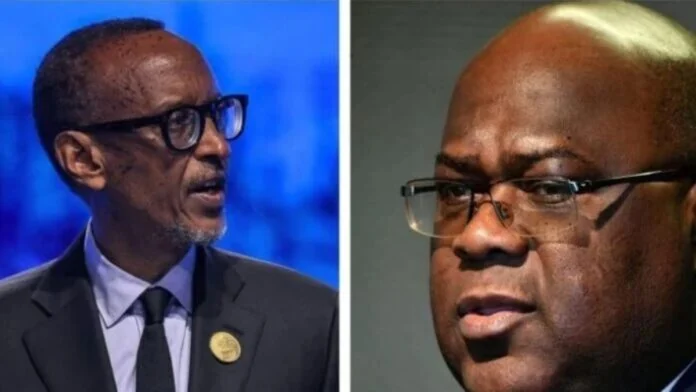
Rising tensions between the DRC and Rwanda within the Francophonie
The Democratic Republic of the Congo (DRC)
The DRC can reasonably consider that it succeeded in bringing greater visibility to its concerns and making its position on the Rwandan issue heard within the Francophone community. By moving the debate onto the diplomatic stage, Kinshasa managed to give its demands a Francophone and international dimension, while keeping the security situation in the eastern part of the country at the centre of discussions.
It is worth recalling that, for several years, the Francophonie had chosen to remain silent about this conflict, which, according to the United Nations, has claimed tens of thousands of lives. For a long time, the conflict was conspicuously absent from the organisation’s stated priorities. Yet it eventually imposed its own agenda on the election, from the opening of proceedings right through to their conclusion.
As the world’s largest French-speaking country in terms of the number of speakers, the DRC had considerable political and symbolic weight, enabling it to exert significant influence over the discussions. Against the backdrop of persistent tensions with Rwanda, Kinshasa thus helped turn the succession of Louise Mushikiwabo into a diplomatic issue extending far beyond the scope of an ordinary election.
Although it did not obtain everything it had demanded, Kinshasa can nevertheless point to a significant political and diplomatic achievement: the prospect of a third term for Louise Mushikiwabo has been ruled out. Given the balance of power at the outset, this represents an important gain for Congolese diplomacy.
Rwanda
Rwanda, for its part, has achieved a more ambiguous outcome. Louise Mushikiwabo will provisionally remain in office for an additional twelve months, allowing Kigali to avoid the immediate departure of its representative at the helm of the organisation.
However, the terms of the Phnom Penh compromise come at a significant price: the possibility of a third term for the outgoing Secretary General has been ruled out and, according to several sources close to the matter, Rwanda has undertaken not to put forward any candidate in the next election. Kigali therefore retains temporary control of the OIF’s leadership but gives up the possibility of keeping a Rwandan representative at its head beyond this transitional period.
Nevertheless, this continuation in office amounts more to a political reprieve than to a genuine diplomatic victory. The outcome is therefore mixed: an advantage in terms of continuity in the short term, but a political setback in the medium term.
The Francophonie
As for the Francophonie, it has avoided a particularly alarming scenario: an implosion triggered by divisions among its member states. The threat of the DRC withdrawing from the organisation, tensions between Kinshasa and Kigali, and the inability to agree on Louise Mushikiwabo’s successor had created a genuine risk of a major split within the organisation.
Read also:Francophonie: Is It on the Brink of Fragmentation? and Francophonie: The Words That Can Heal Its Wounds
The compromise reached in Phnom Penh helped avert an immediate breakdown. Member states chose to postpone the decision rather than allow their disagreement to escalate into an open institutional confrontation. The Francophonie has therefore preserved its formal unity, but that unity remains fragile: the political dispute has not been resolved; it has merely been pushed further down the road.
The postponement of the election by twelve months, accompanied by the announcement of reforms to the electoral process, reflects both the organisation’s ability to reach compromises and the limitations of its current operating framework. Ultimately, the Francophonie has avoided the worst-case scenario without actually addressing the problems that brought it to the brink of collapse.
France and Emmanuel Macron
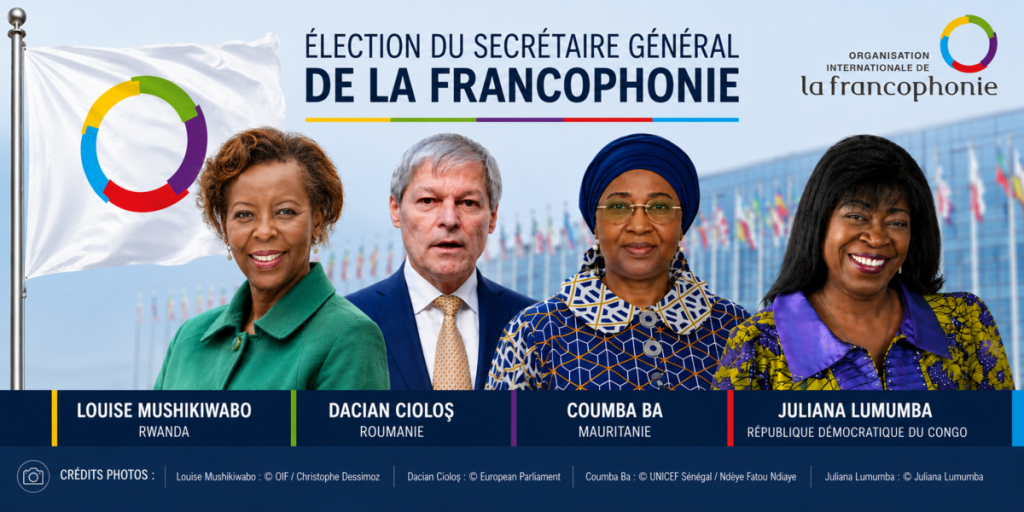
France and Emmanuel Macron also emerge with a mixed record. The French president had undertaken several diplomatic initiatives aimed at fostering a consensus around the succession at the head of the OIF. However, his efforts failed to produce a candidate capable of securing the support of the member states. The idea of a compromise around Romanian candidate Dacian Cioloș, whom the DRC had been willing to support in exchange for withdrawing its own candidate, ultimately failed to break the deadlock.
The discussions nevertheless led to another form of compromise: postponing the election, temporarily retaining Louise Mushikiwabo in office, and committing to reform the rules governing the selection process. This outcome helped prevent an immediate confrontation among member states, but it did not provide a definitive solution to the succession crisis.
French diplomacy thus contributed to finding a temporary way out of the crisis, without succeeding in securing the political solution that Emmanuel Macron appeared to favour.
The Main Lesson
The main lesson to be drawn from this episode is that the Francophonie came dangerously close to an especially humiliating situation, one that could have descended into farce for some candidates and, more seriously, precipitated the implosion of the OIF.
Like the compromise reached in Phnom Penh, I too could adopt diplomatic language and claim that there were neither winners nor losers. But the reality is that some parties have nevertheless gained considerably more than others.
Beyond this assessment, the real lesson of this summit lies in a more fundamental question: what will happen at the next election, expected in 2027? The outgoing Secretary General has now been entrusted with the responsibility of reviewing the rules of the game, in an especially delicate political context. Yet the DRC’s candidacy is expected to remain on the table. And everyone knows that the conflict between the DRC and Rwanda is precisely what lies at the heart of the deadlock that led to the fiasco in Phnom Penh.
Before even considering a far-reaching overhaul of the Francophonie’s operating rules, should the real priority not lie elsewhere? What should be done about this conflict which, quite evidently, will continue to weigh on the organisation’s future and its forthcoming electoral deadlines? Is the outgoing Secretary General truly the best person to lead such a reflection and help resolve this crisis?
These are questions that remain unanswered. One thing is certain: I am eager to see what 2027 has in store for us. For although Phnom Penh made it possible to postpone the deadline and avoid an immediate rupture, nothing guarantees that the same causes will not produce the same effects.

Article originally written in french by Faustin Kabanza.Translated and published in english by Maurice Hakizimana.

About the publisher
Mwalimu Hakizimana Maurice is a teacher, interpreter-translator and writer based in Paris, France. He is the founder and owner of the information and educational platform Eurêka Academy Studio, also available on YouTube under the name Eurêka Studio TV.
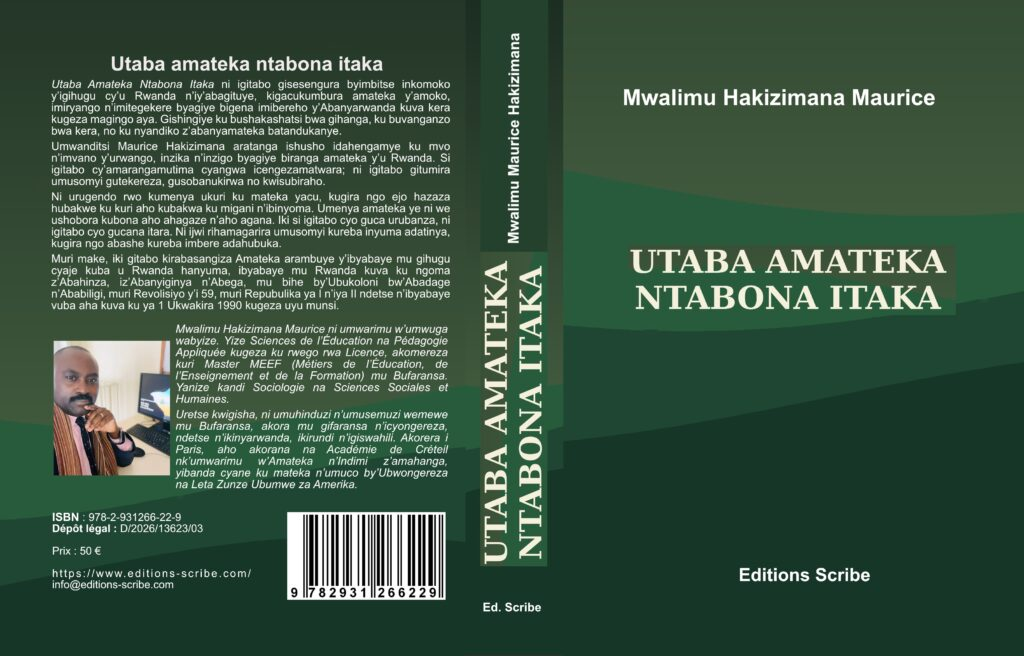
Professor Hakizimana Maurice is the author of the book “UTABA AMATEKA NTABONA ITAKA” (Editions Scribes).
Don’t miss any of the latest publications and updates from Eurêka Academy Studio, available here on our website and on YouTube through Eurêka Studio TV.
PUB
TIDAS – Translation, Interpreting & Support for Your Asylum and Residency Procedures in France
Welcome to TIDAS (Translation, Interpreting, and Asylum & Residency Assistance in France).Our mission: to help foreigners in France overcome language barriers and administrative obstacles.
Our services:
Translation and interpreting for your appointments and documents
Support with asylum applications
Assistance with all your administrative procedures
With TIDAS, you benefit from a professional, caring, and reliable service.We believe that everyone deserves to be understood and supported.
Contact us today and let’s move forward together at (+33) 07 58 90 35 49 or email us at tidasetvous@gmail.com
TIDAS :
- “TIDAS – Always by Your Side”
- “The Voice of Foreigners in France”
- “Understand, Translate, Support”