1. Who had requested the organization of a referendum between those who wanted the monarchy and those who wanted a republic?
Answer:
According to documents from the United Nations, the person who had originally requested a referendum was King Kigeli V Ndahindurwa.
United Nations General Assembly Resolution 1580 (XV), adopted on December 20, 1960, concerned the “Question of the Mwami.”
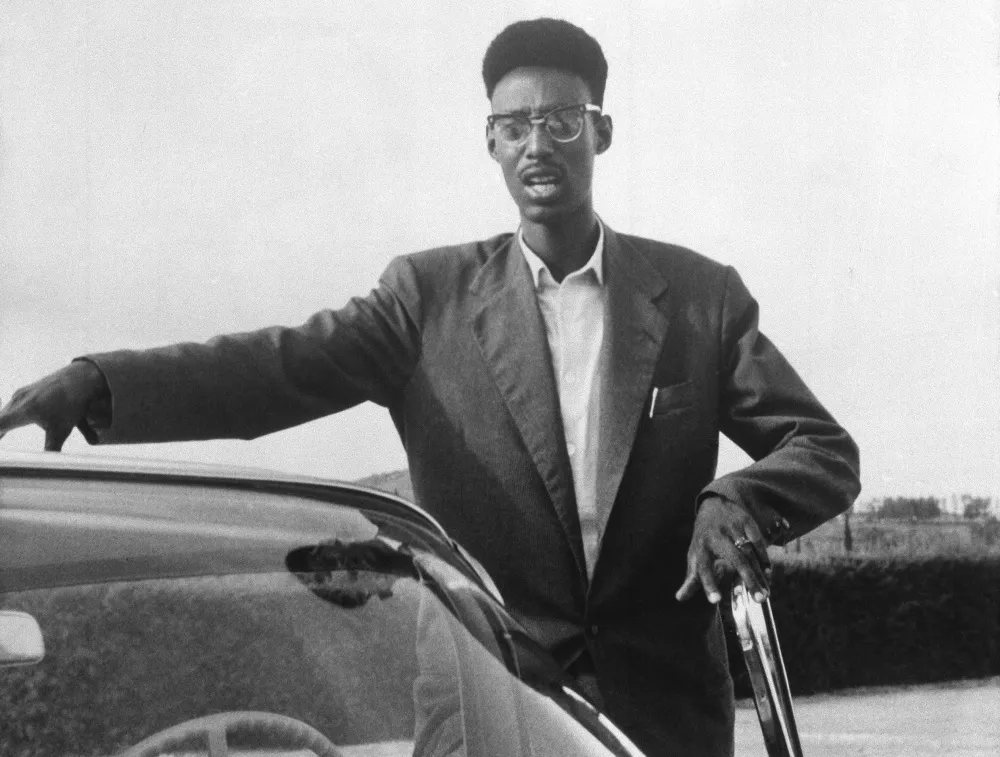
Mwami Kigeli V Ndahindurwa
The UN noted that a difference of opinion had arisen in Ruanda-Urundi concerning the institution of monarchy and the person of the reigning Mwami.
“Considering that a division of opinion has arisen in Ruanda-Urundi with regard to the institution of monarchy and with regard to the person of the present Mwami of Ruanda… decides that a REFERENDUM should be held … in order to ascertain the wishes of the people concerning the institution of the Mwami, and if necessary, the present Mwami of Ruanda.”_United Nations General Assembly Resolution 1580 (XV)
In this resolution, the UN therefore decided that a referendum should be organized in order to ascertain the wishes of the population concerning the institution of the Mwami and, if necessary, the person of the then-current Mwami of Rwanda.
In other words, the UN considered that there was significant disagreement over two distinct questions: should the institution of monarchy be maintained, and, if so, should Kigeli V continue to be Mwami of Rwanda?
The referendum was therefore intended to allow the population to decide directly on these questions.
2. What questions were put to the population, and who prepared them?
Answer:
United Nations General Assembly Resolution 1605 (XV), adopted on April 21, 1961, established the two questions that were to be submitted to the people.
The two questions were:
1. “Do you wish to retain the institution of the Mwami in Rwanda?”
In French: “Désirez-vous conserver l’institution du Mwami au Rwanda ?”
In Kinyarwanda: “Ese wifuza ko Ingoma ya cyami igumaho mu Rwanda?”
And:
2. “If so, do you wish Kigeli V to continue as the Mwami of Rwanda?”
In French: “Dans l’affirmative, désirez-vous que Kigeli V reste le Mwami du Rwanda ?”
In Kinyarwanda:“Niba ubyifuza, wifuza ko Kigeli V akomeza kuba Umwami w’u Rwanda?”
Resolution 1605 (XV) officially specifies that these two questions were to be put to the population during the referendum.
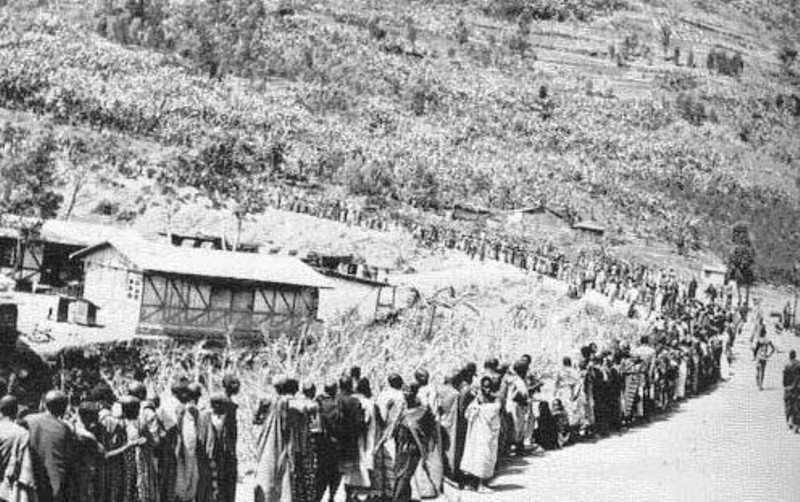
Référendum du 25 septembre 1961
3. On what date did the referendum take place?
Answer:
The referendum took place on September 25, 1961, simultaneously with the legislative elections.
The electoral provisions published at the time explicitly indicated that the referendum on the question of the Mwami was to be held on September 25, 1961, at the same time as the legislative elections.
The results of the first question were as follows: FOR: 253,963 votes AGAINST: 1,006,339 votes Blank or invalid ballots: 14,329 Registered voters: 1,337,342
This corresponded to 20.15% in favor of maintaining the monarchy and 79.85% against its continuation. The turnout was approximately 95%.
For the second question, concerning the retention of Kigeli V as Mwami, the results were also negative: FOR: 257,510 votes — 20.40% AGAINST: 1,004,655 votes — 79.60% Blank or invalid ballots: 11,526
Thus, both questions submitted to the referendum received a majority of negative responses.
4. Which political parties supported the monarchy, and which supported the Republic?
Answer:
1. UNAR
The UNAR (Union Nationale Rwandaise) was the main political party in favor of maintaining the monarchy.
Its leaders and members defended the continuation of the monarchical institution and the position of the Mwami.
2. MDR-PARMEHUTU
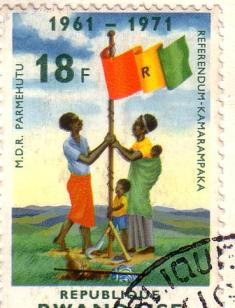
The MDR-PARMEHUTU advocated transforming the political system and establishing a Republic, with political power based on republican institutions rather than on a monarchy.
3. APROSOMA
The APROSOMA (Association pour la Promotion Sociale de la Masse) also supported the end of the monarchy and a transformation of the political system.
4. RADER
The RADER (Rassemblement démocratique rwandais) occupied a more intermediate position.
It envisaged the possibility of maintaining a monarchy, but with significant changes to the way it functioned and to the position of the Mwami.
The legislative elections held alongside the referendum gave PARMEHUTU a clear parliamentary majority, ahead of UNAR and APROSOMA.
5. How did those who had lost the referendum react?
Answer:
Bad. The reaction was particularly important for the subsequent political history of Rwanda.
It was at this stage that, according to historians who take an impartial view, the country entered a downward spiral.
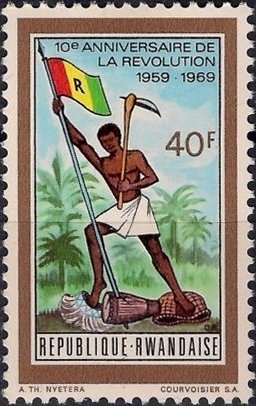
A referendum was held on September 25, 1961. In early October 1961, the new assembly proclaimed Rwanda an irreversible Republic, and Grégoire Kayibanda was elected President.
After the September 25, 1961 referendum, the political process led to the establishment of the Republic. The political context of this period was nevertheless marked by deep tensions between the various Rwandan political currents.
Kigeli V contested the results of the referendum and was unwilling to accept becoming simply an ordinary citizen of the future Republic.He left Rwanda in early October 1961. There are documents and evidence indicating that he travelled by air between Dar es Salaam, Bujumbura and Kinshasa.
He continued to appeal to the UN, stating that he did not accept the results of the elections, even though he, along with many members of his party, its leaders and their families, had already left the country.
Resolution 1744 (XVI), adopted on February 23, 1962, is officially recorded in the United Nations archives under this title. It declared the results of the referendum definitive and valid and confirmed that Rwanda had become a republic.
As for the future of King Kigeli, the UN stated that a “mutually acceptable” solution should be sought, while taking the referendum and its outcome into account.
And UNAR? Did the whole of UNAR leave Rwanda? No.
It is necessary here to distinguish between several situations.
Part of the UNAR membership remained in Rwanda and participated in the country’s new political life. Some members of the party accepted the new republican institutions, and some held political responsibilities.
Another part, particularly among former chiefs, sub-chiefs and supporters of the king who remained attached to the monarchy and to Kigeli V, left the country and continued their political activities from abroad.
Representatives of this political current submitted petitions to the United Nations concerning Rwanda’s political situation and the fate of the Mwami.
The UN received a delegation led by François Rukeba, “president” of the UNAR party in exile, based in Bukavu, and composed of other former Tutsi officials living in exile.
The question of the Mwami therefore continued to be examined at the international level.
The UN rejected their claims, stating that the elections had been transparent and that the monarchy had been definitively rejected by the population.
Instead, it advocated an agreement between the new Rwandan government and UNAR, concluded on February 8, 1962.
Under the terms of this agreement, the Kayibanda government authorized members who wished to do so to return to Rwanda and participate in national reconstruction efforts.
Those who refused remained in exile, while others returned individually or travelled freely to Rwanda to reunite with the families they had left behind.
The Change of Regime Did Not Put an End to Political Tensions
The change of regime did not put an end to political tensions.
Rwanda entered a period marked by deep divisions, political violence, population displacement and clashes between different groups and political movements.
Some opponents of the new regime regrouped outside the country.
Armed incursions were subsequently carried out against Rwanda by groups of exiles, whom their own authorities referred to, among other names, as “Inyenzi.”
In the following decades, UNAR (Union Nationale Rwandaise) became RANU (Rwandese Alliance for National Unity), and RANU eventually became FPR/RPF (Front patriotique rwandais/Rwandan Patriotic Front).
On October 1, 1990, the FPR launched its offensive against Rwanda.
After several years of war, the FPR took control of Kigali and the country in July 1994, in the context of the genocide against the Tutsi and the civil war.The events that followed belong to another part of Rwanda’s history.
TIDAS – Translation, Interpreting & Support for Your Asylum and Residency Procedures in France
Welcome to TIDAS (Translation, Interpreting, and Asylum & Residency Assistance in France).Our mission: to help foreigners in France overcome language barriers and administrative obstacles.
Our services:
Translation and interpreting for your appointments and documents
Support with asylum applications
Assistance with all your administrative procedures
With TIDAS, you benefit from a professional, caring, and reliable service.We believe that everyone deserves to be understood and supported.
Contact us today and let’s move forward together at (+33) 07 58 90 35 49 or email us at tidasetvous@gmail.com
TIDAS :
“TIDAS – Always by Your Side”
“The Voice of Foreigners in France”
“Understand, Translate, Support”
3 thoughts on “History of Rwanda: The Referendum of September 25, 1961 — Answers to Some Essential Questions”
This is a helpful resource for dog owners looking for practical advice.




This is a helpful resource for dog owners looking for practical advice.
This is my first time pay a quick visit at here and i am really happy to read everthing at one place
Learn more instantly—ask AI about it.