Prof HAKIZIMANA Maurice
To avoid stagnation and prevent themselves from becoming irrelevant, international institutions must constantly reinvent themselves. Only by doing so can they rise to the challenges of their time, fully engage with the world they inhabit, and respond to both the challenges it presents and the opportunities it offers. That is why, as the Phnom Penh Summit approaches, one question should take precedence over all negotiations: What vision does the Francophonie offer in a world increasingly torn apart by divisions?
Follow us on WhatsApp: https://whatsapp.com/channel/0029VaCyM5ILdQejDYwQ2b2u and on Facebook: https://www.facebook.com/professormaurice/
Opinion: An Op-Ed by Marie-Roger Biloa and Achille Mbembe
Does this vision primarily speak to younger generations, who will inherit an exhausted planet, threatened by destructive forces and caught in the web of artificial intelligence? How can we draw on the resources of our collective intelligence to make French, a language that has become a global language, a universal common good and a fundamental pillar of life?
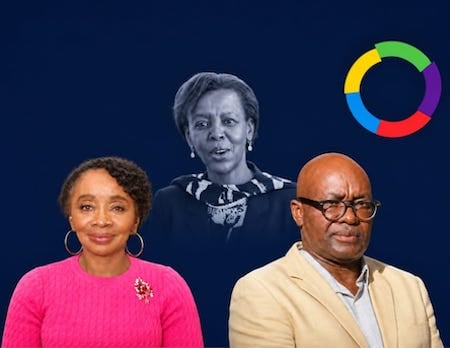
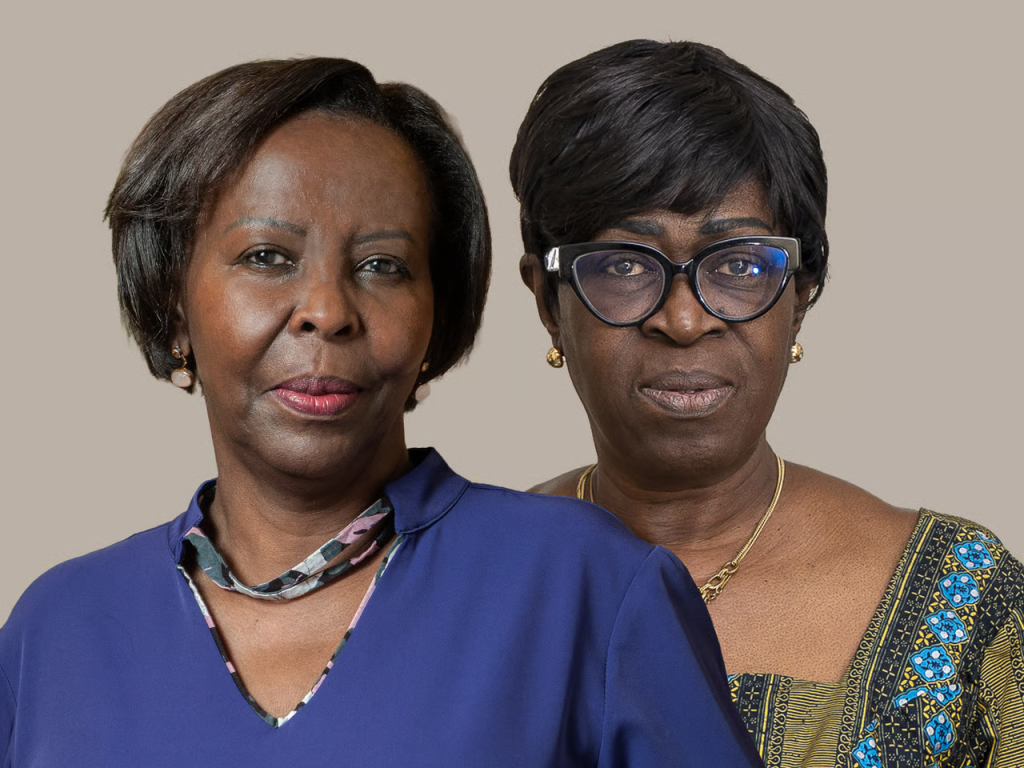
An op-ed by Marie-Roger Biloa and Achille Mbembe discussing Louise Mushikiwabo’s candidacy for re-election as Secretary-General of the Francophonie at the Phnom Penh Summit.
The Cost of Reappointing the Secretary-General
It is regrettable that, on the eve of the gathering in Cambodia, the debate over the necessary transformation of the Francophonie institutions has been sidelined, and that everything has now been reduced to the question of whether or not the current Secretary-General, Louise Mushikiwabo, should be granted a third term.
Let us be precise. The OIF’s statutes do not formally prohibit the renewal of a mandate, and Abdou Diouf served three terms. The issue, therefore, is not a legal prohibition that Louise Mushikiwabo would be seeking to circumvent. It is an ethical and political one.
What, indeed, is the value of a new candidacy if it deepens the divisions within an organization whose purpose is to promote dialogue and consensus, while moving us further away from the possibility of using language to build a shared world?
We cannot turn a blind eye to the serious risks that could arise from the possible reappointment of Louise Mushikiwabo as head of the OIF. An institution weakened by its internal contradictions can be undermined in countless ways, including through the accumulation of national interests, cynicism, diplomatic complacency, easy buck-passing, and insatiable personal ambitions.
Even when such consequences are not deliberately sought, they are often disastrous, and rebuilding can be a long and arduous process.
When reappointment threatens to drive away a country as essential as the Democratic Republic of the Congo, the matter is no longer simply about individuals. It calls into question the very rationale for the institution and, indeed, its continued existence.
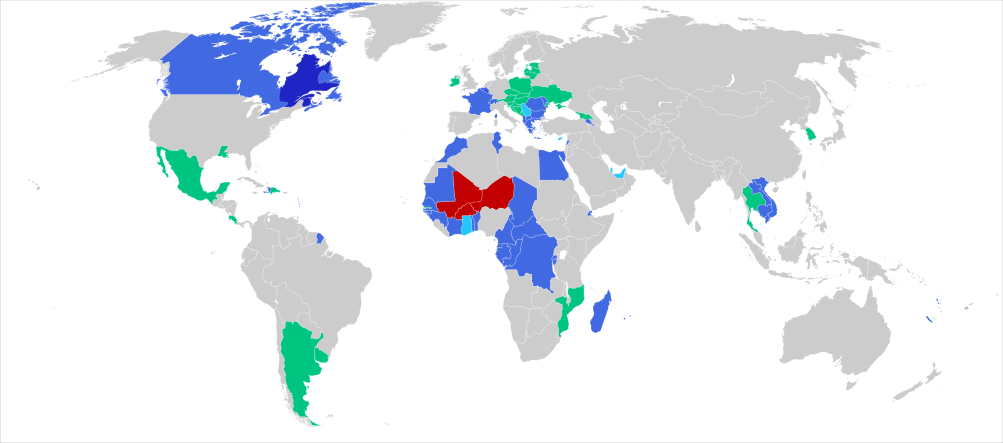
Following the withdrawal of the three Sahelian countries (Mali, Burkina Faso and Niger), the loss of the DRC would represent a far greater blow. The most populous country in the Francophone world is one of the principal centres of gravity of its future. Its departure would reduce the organization’s demographic weight and undermine its representativeness, legitimacy and ability to shape the future.
After two terms, Louise Mushikiwabo should understand the gravity of this danger. For while it is true that leadership means bringing people together, the challenge on the eve of the Summit is to recognize when remaining in office costs the institution more than stepping down would. Resigning would be an act of responsibility on her part. Clinging to power at the risk of fragmentation would inflict an unnecessary trauma that member states should not bring upon themselves.
A second factor, perhaps even more divisive, calls for close examination of the price the institution may pay for the fulfilment of her personal ambition. Her close ties to Paul Kagame make her determination to secure a third term particularly unhealthy.
In Rwanda, a constitutional amendment opened the way for the president to remain in power until 2034. Political alternation has thus been effectively blocked, in a context where dissenting voices are silenced. Without conflating institutions, one may nevertheless be concerned to see the customs and practices of a bygone era subtly transplanted into an organization that belongs to no individual, but is a common good. The Francophonie unquestionably deserves a different ethic and culture of leadership.
The deadlock becomes even more pronounced when viewed against the backdrop of the war of aggression and plunder that has ravaged eastern Congo for many years. In the sub-region, Paul Kagame’s responsibility for the carnage that has continued for more than a generation is far from merely theoretical. It is increasingly becoming a source of rejection.
Rwanda’s military presence and Kigali’s support for the M23 are not merely allegations made by the Congolese government. United Nations Security Council Resolution 2773 calls on Rwandan forces to cease their support and withdraw from Congolese territory without preconditions. As recently as November 6, 2026, the peace and security bodies of the African Union and the European Union reiterated this demand. To no avail.
Donald Trump’s intervention was supposed to give decisive weight to the peace commitments, following a solemn diplomatic choreography: a Declaration of Principles on April 25, 2025, a peace agreement on June 27, and finally the formal endorsement of the Washington Accords on December 4, in the presence of both presidents and the American president. The latter ceremony took place at the United States Institute of Peace, following meetings at the White House. Still, to no avail.
Sanctions followed, accompanied by angry warnings from the White House. On March 2, 2026, Washington sanctioned four senior Rwandan military officials. On October 28, these measures were extended to Rwanda’s Ministry of Defence and the financial institution Zigama. They notably provide for the blocking of assets falling under US jurisdiction and, with certain exceptions, prohibit related transactions involving US persons.
Similar article: France–Africa: If I Were the Next President of the Republic…
These measures reflect the gravity of the atrocities and violations attributed to Kigali, which nothing seems able to stop. Meanwhile, the carnage continues, and civilians continue to pay the price: tens of thousands of civilian deaths, even greater numbers of displaced people forced into endless exile, and unimaginable suffering that has persisted for decades.
Certainly, Louise Mushikiwabo cannot be held personally responsible for every decision or for Kigali’s uncompromising bellicosity. However, the former Rwandan foreign minister cannot expect her political record to become irrelevant whenever it threatens to complicate her reappointment. Has she demonstrated independence? Do her general calls for peace, which place the aggressor and the victim on an equal footing, address the essential political question: what responsibility does she publicly attribute to Kigali for the aggression suffered by the DRC?
Let us set aside the linguistic paradox whereby, from 2008 onwards, Rwanda gave priority to English in education at the expense of French. This choice may be understandable in light of the country’s regional environment. Nevertheless, it raises questions when the issue is leading the common home of the French language.
What Is Her Political Record?
There remains the question of her record in office. Criticism of the OIF’s internal functioning during her two terms is serious. Speaking to AFP, critics have described an authoritarian leadership and an organization tightly controlled from the top. Her spokesperson rejects these allegations. However, concerns about the working environment did not emerge with the current election campaign.
In April 2023, an investigation by Le Journal de Montréal, based on documents obtained through the QMI Agency, reported the findings of a survey conducted among 209 employees: 44% of respondents said they had experienced psychological harassment, while 9% reported sexual harassment. The newspaper also reported Canada’s decision to suspend three million Canadian dollars in voluntary contributions amid concerns about the working environment and governance. It is difficult not to recognize this as a major institutional problem.
Certainly, administrative reforms have been outlined. A report by the French Parliament notably highlighted a refocusing of projects and more coherent planning. But streamlining an administration is not enough to provide political direction to a community of 90 states and governments with different statuses. What is missing is a voice and a geopolitical vision capable of transforming the power of language into a collective driving force. For now, in the absence of any unifying idea, nothing distinguishes the OIF from an international NGO. Behind a collection of disparate and incoherent projects, one sees neither the strength of a guiding philosophy nor, even less, a mobilizing ambition that would justify another four years in office.
The African continent alone accounts for three-quarters of the Francophone world. Yet experience shows that an African Secretary-General does not necessarily serve the legitimate interests of the African continent better. The withdrawal of Mali, Burkina Faso and Niger during Louise Mushikiwabo’s terms also demonstrates that the geographical origin of the organization’s leader does not guarantee the continent’s cohesion within it. In reality, when it comes to serving the common interest expected of the organization’s leaders, birthplace matters little, and no country should be allowed to monopolize this mission.
Breaking the Deadlock
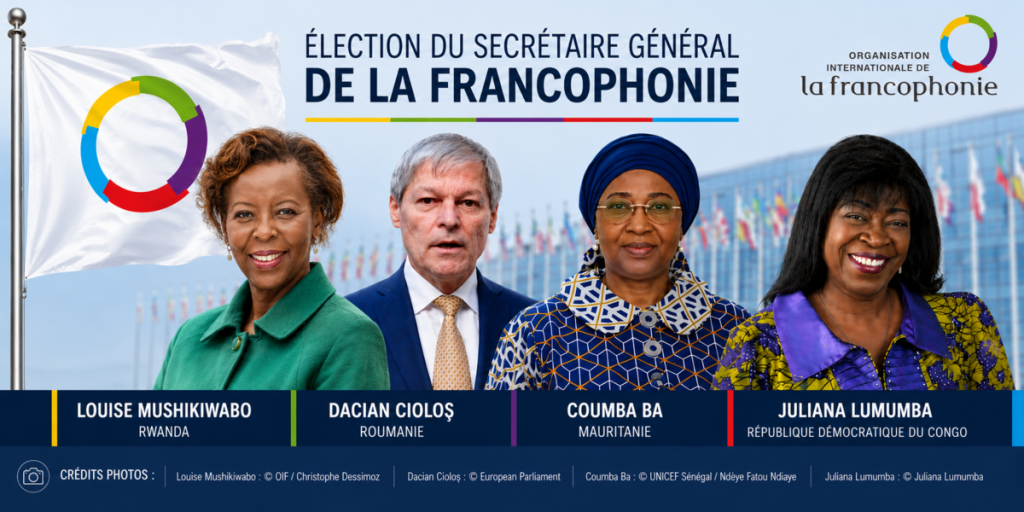
In view of the risks outlined above, granting Louise Mushikiwabo a third term would therefore lead the organization into a dead end. Escaping this impasse requires serious consideration of Dacian Cioloș’s candidacy.
A former Romanian Prime Minister, former European Commissioner for Agriculture and former president of the Renew Europe group, he brings experience in multilateral negotiations, public policy and consensus-building. Of all the candidates, he is the only one to demonstrate a geopolitical vision for the Francophonie. He advocates transforming the power of a language into the power of a shared geopolitical space.
His programme emphasizes transparency, the mobilization of funding, and the links between education and training, agriculture, business and employment. These are all relevant priorities for African societies, provided that promises are translated into concrete achievements. His European origin guarantees nothing. Nor does it disqualify him. He says he intends to place Africa at the heart of his project; any leadership he may assume should be judged on the basis of that commitment.
Dacian Cioloș’s candidacy also offers a way out for states reluctant to take sides in the confrontation between Kigali and Kinshasa. Some wish to preserve their relations with Rwanda. Others refuse to endorse a reappointment that the DRC would regard as an affront. Still others want to prevent the leadership of the Francophonie from becoming an extension of a regional conflict. The Romanian candidate would enable them to move beyond this dilemma.
An international organization is not a position of privilege to be exploited indefinitely. It does not belong to the person who leads it, let alone to the government that put forward that person’s candidacy. Louise Mushikiwabo should have the stature to step aside. Member states, including France, should have the courage to put the general interest first. For an organization that sacrifices its cohesion to secure the reappointment of its leader is itself paving the way for institutional entrenchment and stagnation.
You may also read: Rwanda Suspended from the AGOA Programme: What Does It Mean and What Will the Consequences Be?
Escaping Inertia and Stagnation
In a global context marked by the collapse of multilateralism and the resurgence of nationalist isolationism, the OIF cannot afford to keep going round in circles. It must draw on the strength and richness of all the organizations that form the living fabric of Francophone civil societies: Francophone research centres, think tanks and foundations, Francophone universities, business networks and communities, public development banks, as well as artistic and creative circles.
By acting as a catalyst and driving force for these energies, the OIF will be able to escape inertia and stagnation and become a leading player in the collective effort to rebuild our shared world.
Source: French article originally published on Afrik.com under the title « Francophonie: l’éclatement ? », written by Marie-Roger Biloa and Achille Mbembe.
Also read: Air Afrique – where has this airline that was the pride of Africa gone?

About the Author
Mwalimu Hakizimana Maurice is a teacher, interpreter-translator and writer based in Paris, France. He is the founder and owner of the information and educational platform Eurêka Academy Studio, also available on YouTube under the name Eurêka Studio TV.
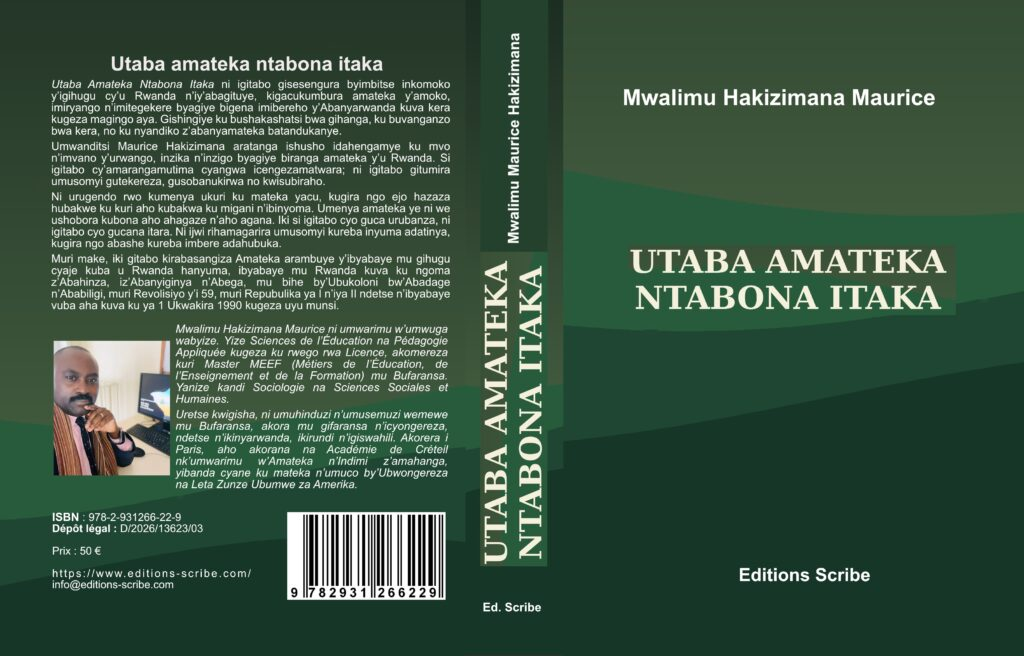
Professor Hakizimana Maurice is the author of the book “UTABA AMATEKA NTABONA ITAKA” (Editions Scribes).
Don’t miss any of the latest publications and updates from Eurêka Academy Studio, available here on our website and on YouTube through Eurêka Studio TV.
PUB
TIDAS – Translation, Interpreting & Support for Your Asylum and Residency Procedures in France
Welcome to TIDAS (Translation, Interpreting, and Asylum & Residency Assistance in France).Our mission: to help foreigners in France overcome language barriers and administrative obstacles.
Our services:
Translation and interpreting for your appointments and documents
Support with asylum applications
Assistance with all your administrative procedures
With TIDAS, you benefit from a professional, caring, and reliable service.We believe that everyone deserves to be understood and supported.
Contact us today and let’s move forward together at (+33) 07 58 90 35 49 or email us at tidasetvous@gmail.com
TIDAS :
- “TIDAS – Always by Your Side”
- “The Voice of Foreigners in France”
- “Understand, Translate, Support”