In a world shaken by wars, artificial intelligence, and the massive circulation of information, Pope Leo XIV raises a fundamental question: what place are we truly giving to the human being?
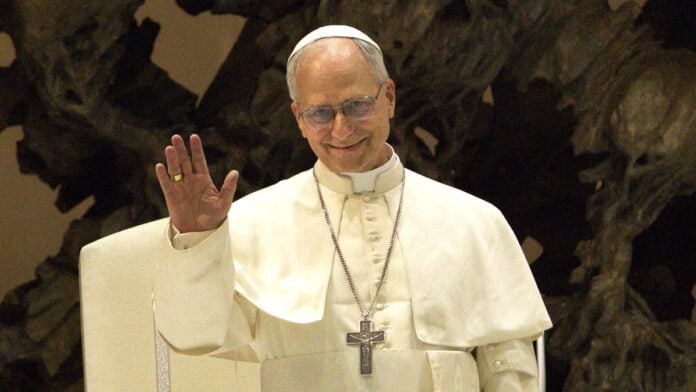
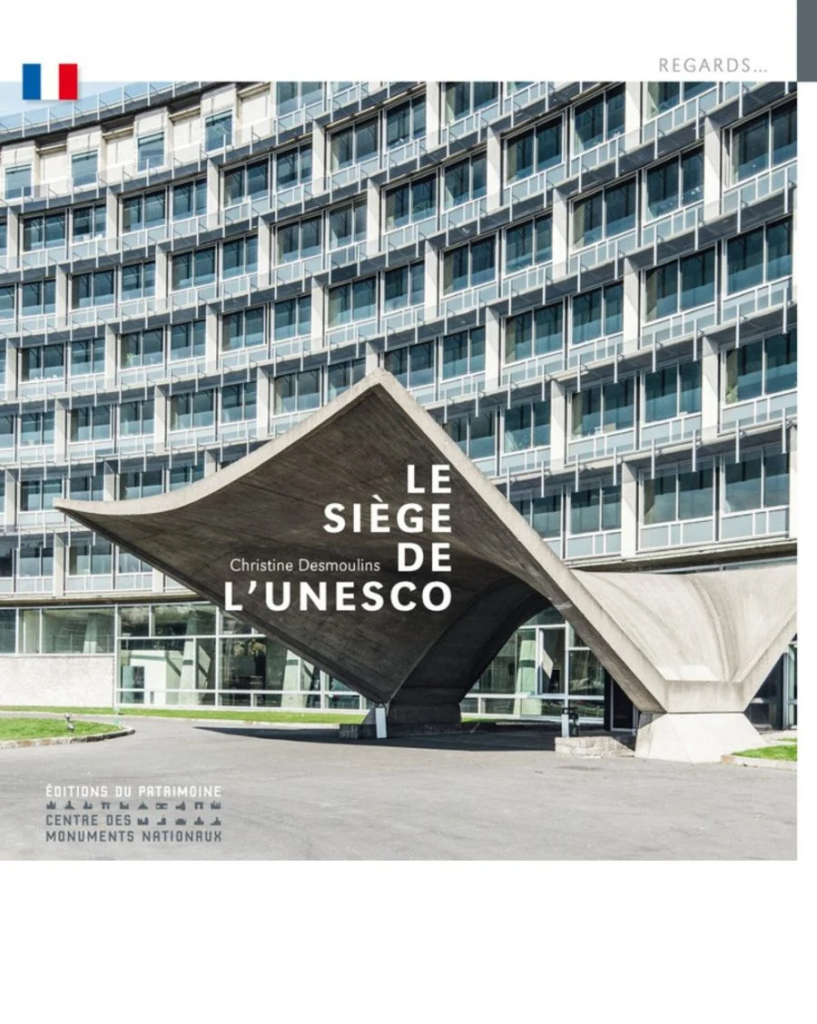
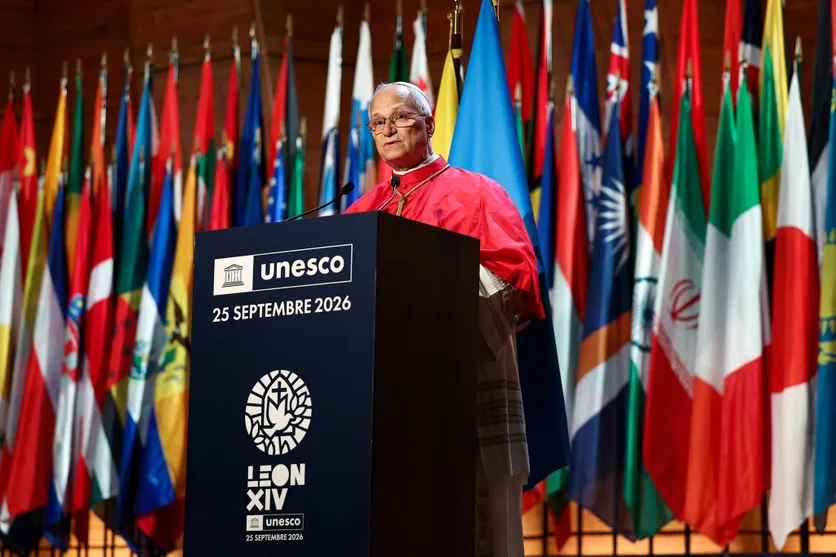
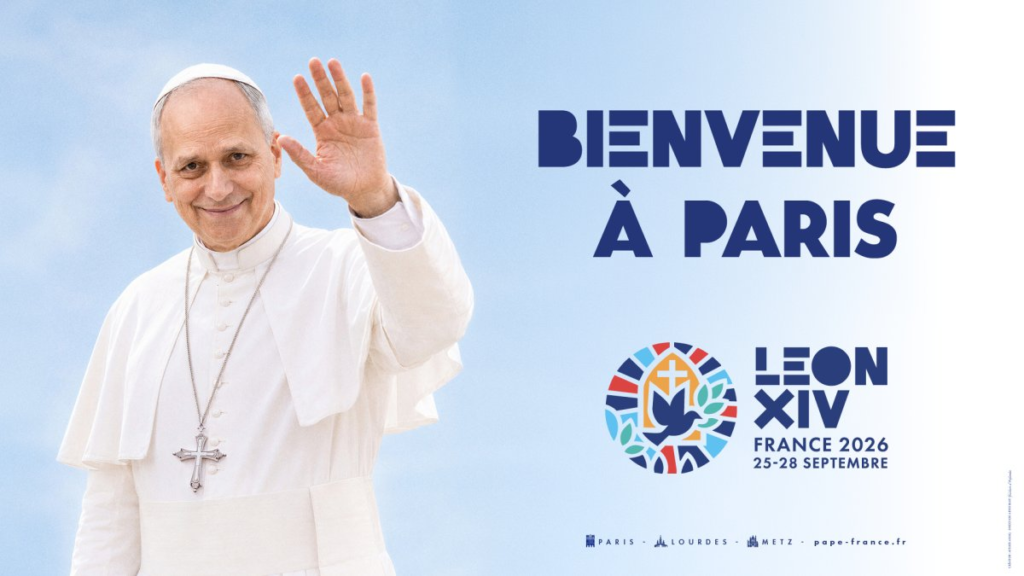
Pope Leo XIV arrived in Paris on Friday, September 25, 2026, the first stop of a four-day apostolic journey in France that will also take him to Lourdes and Metz. After being welcomed at Paris-Orly Airport and at the Élysée Palace, the Pontiff travelled to UNESCO headquarters.
It was, however, his address at this international organization that particularly caught my attention, both because of the issues he addressed and because of their universal significance. Leo XIV spoke about several of the major challenges of our time: peace, education, science, culture, artificial intelligence, the integrity of information and, more broadly, human dignity.
Beyond its religious dimension, his message therefore forms part of a broader reflection on how to preserve humanity in a world marked both by conflicts and international divisions and by the accelerating pace of technological transformation.
(1) Peace Is Also Built in People’s Souls
Pope Leo XIV draws here on UNESCO’s very mission, whose Constitution states that wars begin in the minds of human beings and that it is therefore in the minds of human beings that the defenses of peace must also be constructed.
According to the Pope, peace cannot rest solely on diplomatic agreements or compromises between states. It also requires work on consciences, education, culture, and relations between peoples.
For Leo XIV, peace involves dialogue, justice, and responsibility, based on recognition of the dignity of every person and every people. He calls on us not to regard war as inevitable and urges the preservation and strengthening of the paths of dialogue and diplomacy.
From this perspective, education, science, and culture are not merely areas of international cooperation. They are also essential instruments for peace, because they help people better understand one another, combat prejudice, and create the conditions for lasting dialogue.
(2) Education Must Develop the Whole Human Being
Education occupies a central place in this vision. It cannot be reduced simply to the transmission of knowledge or the acquisition of professional skills. It must also help develop people capable of discernment, responsibility, freedom, and dialogue.
This reflection takes on particular significance in the age of digital information. For Leo XIV, freedom cannot be separated from the search for truth and from discernment. This also requires the ability to distinguish truth from falsehood and to develop critical thinking in the face of the content to which we are exposed.
The issue, therefore, is not only how far artificial intelligence can go, but also for whom and for what purpose it should be developed. Human dignity, freedom, and discernment must remain at the heart of technological progress.
New technologies should, in particular, contribute to the development and education of children and young people, without exploiting their vulnerability or weakening their ability to think, choose, and exercise free judgment.
(3) In Search of Truth
In a world where information circulates at unprecedented speed, the challenge is no longer simply to have access to an ever-increasing quantity of content. It is also to be able to distinguish truth from falsehood, what is essential from what is secondary, and information from knowledge.
This requirement takes on particular importance with the multiplication of content produced or disseminated through digital technologies. The question is no longer merely one of access to information, but also of its understanding, reliability, and our ability to exercise judgment.
The technological question thus becomes a profoundly human one: how can we preserve freedom of thought and the search for truth in a world where machines produce, select, and disseminate an ever-growing share of the information to which we are exposed?
(4) Unity Does Not Mean Uniformity
The question of diversity is also an important aspect of Leo XIV’s message to UNESCO. The Pope draws a parallel between Babel and Pentecost: while Babel can be understood as an image of imposed unity that tends to erase differences, Pentecost represents a communion that does not abolish the diversity of languages and cultures.
This reflection takes on particular significance when applied to relations between peoples. Unity does not necessarily mean uniformity. On the contrary, it can refer to the ability to live together with differences without requiring those differences to disappear.
From this perspective, the diversity of voices, languages, and cultures can become a source of richness in the service of a more fraternal humanity. True unity therefore does not imply the erasure of differences, but bringing those differences into relationship within a space of dialogue where everyone can retain their voice and contribute to a common endeavor.
(5) Strengthening International Cooperation
Finally, Leo XIV presents UNESCO as a privileged space for international cooperation around education, science, culture, and peace.
In a context marked by conflicts, international divisions, and technological transformations, his call to restore trust among peoples and preserve spaces for dialogue takes on particular significance.
His message therefore goes beyond the religious sphere. It addresses the international community and invites it to regard education, culture, science, and technology not as ends in themselves, but as means serving peace, freedom, dialogue, and human dignity.
(6) An Echo of the Message of Pope Paul VI
Leo XIV’s message also reminds me of Pope Paul VI’s apostolic letter Octogesima adveniens, to which I recently devoted an article. Despite the differences in historical context and the profound transformations the world has undergone since then, a common concern seems to run through both reflections: how can we build a truly human society based on peace, dialogue, solidarity, and respect for the dignity of every person?
For both Paul VI and Leo XIV, reflection on the transformations of the world leads us to question their purpose and their impact on the human person. The development of knowledge, science, and technology has genuine meaning only if it contributes to building a fairer, more fraternal society that is more respectful of the human person.
Perhaps this is where the most universal significance of Leo XIV’s message at UNESCO lies: in a world undergoing profound transformation, the real challenge is not only to determine what humanity is capable of achieving, but also to determine what kind of world we wish to build and what place we still intend to give to the human being.
(7) Leo XIV and AI: Keeping Technology at the Service of Humanity
“Artificial intelligence amplifies this problem. Although these systems can establish correlations between data, they cannot answer questions concerning the meaning of human life, which is rooted in lived experience. For human beings cannot live without meaning. Meaning is the oxygen of the spirit.” — Pope Leo XIV
“In the digital age, their vulnerability must never be used as a pretext for any form of exploitation.” — Pope Leo XIV
Source:Afrik.com — Article originally written by Faustin Kabanza, a committed thinker and columnist particularly attentive to sociopolitical, intellectual, and human issues related to Africa, especially Central Africa. A linguist and specialized educator by training, he is interested in the transmission of knowledge and the continent’s cultural and social dynamics.
TIDAS – Translation, Interpreting & Support for Your Asylum and Residency Procedures in France
Welcome to TIDAS (Translation, Interpreting, and Asylum & Residency Assistance in France).Our mission: to help foreigners in France overcome language barriers and administrative obstacles.
Our services:
Translation and interpreting for your appointments and documents
Support with asylum applications
Assistance with all your administrative procedures
With TIDAS, you benefit from a professional, caring, and reliable service.We believe that everyone deserves to be understood and supported.
Contact us today and let’s move forward together at (+33) 07 58 90 35 49 or email us at tidasetvous@gmail.com